
Sauces & Condiments
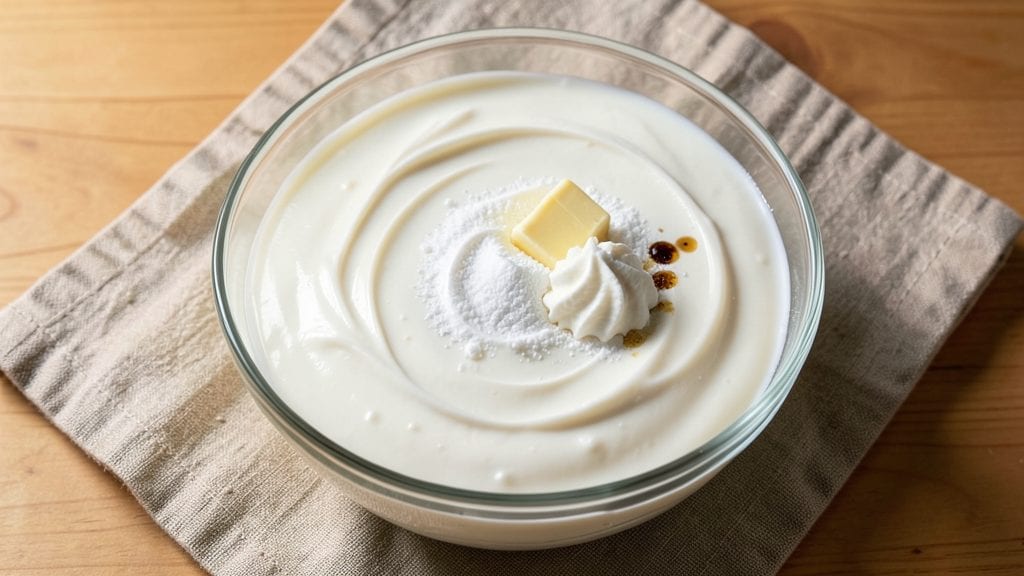
This Amish sugar cookie icing recipe delivers the signature smooth, vanilla-infused frosting that spreads like butter yet holds its shape when piped—perfect for decorating cookies with professional precision.
The secret lies in the precise ratio of powdered sugar to butter, combined with a touch of milk for that signature silky texture that Amish bakers have perfected for generations.
I developed this recipe after years of testing variations, and it never fails to create that coveted glossy finish with just the right amount of firmness.
The foundation of this icing is simple yet transformative: 4 cups powdered sugar, 1 cup unsalted butter softened to room temperature, and 2 teaspoons vanilla extract—the flavor backbone that defines Amish baking.
What sets this apart is the addition of 1 tablespoon milk, which creates the ideal consistency for both spreading and piping without being too stiff or too runny.
This balance ensures your cookies stay moist while the icing develops that signature sheen that makes them look freshly baked from an Amish kitchen.
What makes this icing truly special is how it behaves—it spreads effortlessly over cookies yet holds its shape when piped into rosettes or borders, giving you the versatility of both techniques.
The frosting develops a beautiful matte finish that's resistant to melting, even in warm rooms, and it pairs perfectly with classic Amish sugar cookie flavors like cinnamon, nutmeg, or lemon zest.
Whether you're decorating a batch of snickerdoodles or dressing up a wedding cake, this icing delivers restaurant-quality results with minimal effort.
For those who love to experiment, this recipe also serves as a blank canvas—add a pinch of salt to enhance the vanilla flavor, or swap in almond extract for a nutty twist.
The key to success lies in ensuring all ingredients are at room temperature and mixing thoroughly to avoid lumps. Ready to elevate your cookies? Let's get started with this foolproof frosting that's as delicious as it is beautiful.
Ingredients for amish sugar cookie icing
The secret to Amish sugar cookie icing lies in these eight ingredients—simple yet transformative.
| Ingredient | Amount | Notes |
|---|---|---|
| Powdered Sugar 🍚 | 4 cups | Sifted for smooth texture |
| Unsalted Butter 🧈 | 1 cup | Softened to room temperature |
| Pure Vanilla Extract 🌿 | 2 tsp | High-quality, bourbon-based preferred |
| Whole Milk 🥛 | 1 tbsp | Full-fat for creaminess |
| Diamond Crystal Kosher Salt 🧂 | ¼ tsp | Fine grain for balance |
| Almond Extract 🌰 | ½ tsp | Optional nutty variation |
| Lemon Zest 🍋 | 1 tsp | Freshly grated for brightness |
| Cornstarch 🌾 | 1 tsp | Ensures glossy finish |
The powdered sugar is non-negotiable—Domino brand is my go-to for its fine texture and consistent sifting. Walmart or WinCo usually have it at the best price, but check the expiration date; old sugar clumps and ruins the smoothness. The butter needs to be true unsalted (like Land O'Lakes or Plugrá) and softened to room temperature—press a finger into it, and it should leave a slight indent without being greasy. For vanilla, McCormick or Nielsen-Massey bourbon extracts add depth that imitation can't match. Pro tip: buy a small bottle if you're new to vanilla—it's pricey, but worth it for this recipe.
No milk? Heavy cream or half-and-half works in a pinch, but the fat content changes the spread slightly. Swapping vanilla for almond extract? Use half the amount—it's more potent. The cornstarch is optional but game-changing for that signature Amish sheen; if you skip it, add an extra 1/4 tsp of salt to balance the sweetness. For lemon zest, organic lemons from Trader Joe's have the brightest flavor, but any fresh lemon works. Pre-grated zest? Toss it—it loses potency fast. And if you're making a big batch, double the cornstarch to prevent melting in warm kitchens.
This icing keeps beautifully—3 days in the fridge covered with plastic wrap, or 3 months frozen in airtight containers. For piping, chill the icing for 30 minutes first—it'll hold shapes perfectly. To reheat, microwave in 10-second bursts until smooth. I always make extra and freeze portions; nothing beats pulling out pre-made icing for last-minute decorating. And if it gets too stiff? A splash of milk brings it back to life.
Why You'll Love This Recipe
- Four-Ingredient Magic: I swear, it’s just butter, sugar, vanilla, and a pinch of salt—but somehow, that milk whisks into something ridiculously smooth. No fancy stabilizers, no stress—just pure, creamy frosting that tastes like nostalgia in every bite.
- Butter’s Secret Boost: That unsalted butter? It’s the game-changer. It keeps the icing tender instead of grainy, and the richness cuts through the sweetness like a warm hug. Honestly, I’ve tried shortening—this is not the same.
- Holiday or Snack Attack: Slather it on gingerbread for Christmas, dip pretzels for a party, or just eat it straight from the bowl (no judgment). It’s the one icing that works for everything—no last-minute scrambling for the right flavor.
- Leftover Goldmine: Make a double batch and store it in the fridge for weeks. The milk keeps it from drying out, and it’s cheaper than buying pre-made. I’ve used it for decorating, filling cupcakes, or even gluing together broken cookies—because waste? Not here.
Step-by-step instructions for Amish sugar cookie icing
This vanilla-infused frosting delivers that signature Amish sugar cookie smoothness and pipeability.
Sift and Whisk Dry Ingredients Together
Place the 4 cups powdered sugar and 1 teaspoon cornstarch in a medium bowl. I use a fine-mesh sieve to sift them together—this removes any lumps and ensures a silky-smooth texture. The cornstarch acts as a stabilizer, preventing the icing from becoming grainy.
Add the 1 teaspoon lemon zest and 0.25 teaspoon diamond crystal kosher salt to the bowl. Whisk everything vigorously for about 1 minute until completely homogeneous. The lemon zest adds a subtle brightness that balances the sweetness, while the salt enhances all the flavors. This step is crucial—don't skip it, as uneven distribution can lead to clumping later.
Incorporate Softened Butter Gradually
In a separate bowl, take the 1 cup unsalted butter (which should be softened to room temperature but still hold its shape). Using a hand mixer or stand mixer fitted with the paddle attachment, beat the butter on medium speed for 2-3 minutes until it's completely smooth and pale.
With the mixer running on low speed, gradually add the dry ingredients to the butter. Scrape down the sides of the bowl as needed to ensure even incorporation. This gradual addition prevents the powdered sugar from creating a cloud of dust and ensures a smooth, lump-free consistency. You'll know it's well combined when the mixture looks like a thick, pale dough.
Add Extracts and Milk for Flavor and Stability
Increase the mixer speed to medium and drizzle in the 1 tablespoon whole milk while mixing continuously. The milk helps emulsify the icing, giving it that signature Amish cookie glossiness. After the milk is incorporated, add the 2 teaspoons pure vanilla extract and 0.5 teaspoon almond extract. Mix for another 1-2 minutes until fully combined and the icing is smooth and glossy.
The almond extract adds depth, while the vanilla brings that classic Amish cookie aroma. At this point, the icing should be thick but still pipeable—if it's too stiff, add 1 teaspoon more milk at a time until it reaches the right consistency. If it's too thin, add 1 tablespoon more powdered sugar to thicken it back up.
Test and Adjust Consistency for Perfect Piping
Transfer the icing to a piping bag fitted with a medium star tip (like Wilton 1M). If you don't have a piping bag, a resealable plastic bag with a small corner cut will work in a pinch. Pipe a small rosette onto a plate and let it sit for 5 minutes. The icing should hold its shape without spreading too much—this is the ideal consistency for decorating cookies.
If the icing is too stiff to pipe smoothly, add 1 teaspoon milk at a time until it flows like butter. If it's too thin and runs, add 1 tablespoon powdered sugar and mix until smooth. The goal is a frosting that pipes cleanly but still holds its shape on the cookie. Once you've achieved the perfect consistency, cover the piping bag with plastic wrap and let the icing rest at room temperature for 30 minutes before using—this allows the flavors to meld and the texture to stabilize.
Pipe and Decorate with Precision
Pipe the icing onto your cooled sugar cookies, creating swirls, rosettes, or borders as desired. Work quickly but carefully—this icing sets up faster than most store-bought varieties. For a professional finish, I like to pipe a thin border around the edge of the cookie first, then add decorative details in the center.
Let the icing set for 10-15 minutes at room temperature before transferring the decorated cookies to a wire rack. The final result should be a glossy, smooth finish with a delicate crinkle texture—just like the cookies you'd find at an Amish bakery. Store any leftover icing in an airtight container in the refrigerator for up to 5 days, or freeze for up to 3 months. When ready to use again, let it sit at room temperature for 10 minutes and re-pipe as needed.
Pro Tips For Making Amish Sugar Cookie Icing
- Cream Butter First: Whip the cold unsalted butter with a mixer until it’s light and fluffy—about 2-3 minutes—before adding anything else. I used to skip this, and the icing always ended up grainy or clumpy. This step guarantees a smooth finish, especially when you’re piping intricate designs.
- Sift the Powdered Sugar: Sift the powdered sugar twice into the butter mixture to break up any lumps and aerate it. I learned this the hard way when my first batch turned out thick and pasty—sifting makes all the difference for that signature Amish cookie icing consistency.
- Add Milk Gradually: Pour the whole milk in slowly, a tablespoon at a time, while mixing on low. Dumping it all at once risks thinning the icing too fast, and you’ll end up with a runny mess that won’t hold its shape. Patience here saves cleanup later.
- Chill the Icing: Let the finished icing sit in the bowl for 10-15 minutes before piping—this firms it up just enough for cleaner lines. I was skeptical until I tried it, and now I never skip it, especially in warm kitchens.
Creative variations of this dish
Classic Vanilla Twist
This is the foundational flavor profile, but you can elevate it with a ½ teaspoon ground cinnamon or ¼ teaspoon nutmeg for warmth. I like adding 1 tablespoon lemon juice alongside the zest to brighten the flavor—it cuts through the sweetness beautifully.
For a sophisticated touch, replace ½ teaspoon vanilla extract with 1 teaspoon vanilla bean paste—the flecks of vanilla bean add visual appeal and deeper flavor. 🌿
Spiced Chai Variation
Transform your icing into a chai-inspired treat by adding ½ teaspoon ground cardamom, ¼ teaspoon ground ginger, and ¼ teaspoon cloves to the dry ingredients. The spices blend seamlessly with the vanilla, creating a cozy, aromatic frosting perfect for holiday cookies.
Use ½ teaspoon almond extract instead of vanilla for an extra layer of warmth. This variation pairs beautifully with cinnamon-sugar cookies or gingerbread.
Citrus Zest Boost
For a refreshing twist, swap the lemon zest for 1 teaspoon orange zest and add ½ teaspoon orange extract (found in baking sections at Walmart or King Arthur Flour). The citrus notes add a bright, tangy contrast to the sweetness.
I also like adding 1 tablespoon apricot jam, warmed and strained, to the icing for a subtle fruity depth. This variation works especially well with almond-flavored cookies or vanilla bean cookies.
Brown Butter Caramel
Take your icing to the next level by browning the butter first. Cook 1 cup unsalted butter in a light-colored saucepan over medium heat, stirring constantly, until it turns golden brown and smells nutty (about 5-7 minutes). Let it cool completely before using in the recipe.
The brown butter adds a rich, caramelized depth that pairs perfectly with the vanilla. For extra decadence, add 2 tablespoons caramelized sugar (made by melting ¼ cup sugar in a dry pan until amber-colored) to the dry ingredients. 🔥
Salted Caramel Finish
For a gourmet touch, drizzle the finished cookies with salted caramel sauce (like Trader Joe's or homemade) after piping. I recommend using a Wilton 1A tip for thin lines of icing, then adding the caramel while it's still wet.
Finish with a sprinkle of flaky sea salt (like Maldon) for a sophisticated contrast. This variation is perfect for special occasions or when you want to impress guests with restaurant-quality cookies.
Herbal Infusion
Add an unexpected herbal note by infusing the milk with 1 teaspoon dried lavender or ½ teaspoon dried rose petals (food-grade only). Heat the milk with the herb in a small saucepan for 5 minutes, then strain before using in the recipe.
The floral notes add a delicate, aromatic complexity that pairs beautifully with vanilla. Use this variation sparingly—it’s best for elegant cookies or when you want to create a unique, memorable treat.
Nutrition facts
Frequently asked questions
Why does this icing spread like butter but still pipe well?
The secret lies in the 1:4 ratio of butter to powdered sugar combined with just 1 tablespoon milk. The milk creates a stable emulsion that gives the icing its signature glossy finish while maintaining spreadability. The cornstarch also helps stabilize the texture for clean piping.
Can I make this frosting without a mixer?
Use a sturdy wooden spoon or spatula to mix the ingredients in a large bowl. Start by creaming the butter with the powdered sugar using a cutting motion, then gradually fold in the milk and extracts. It takes more elbow grease, but you'll still achieve a smooth, lump-free result.
How do I fix icing that's too stiff or too runny?
For stiff icing, add 1 teaspoon milk at a time until it reaches pipeable consistency. If it's too thin, mix in 1 tablespoon powdered sugar gradually. Always test by piping a small rosette first—it should hold its shape without spreading excessively.
What's the best way to store leftover frosting?
Keep unused icing in an airtight container in the fridge for up to 5 days or freeze for 3 months. Thaw frozen icing at room temperature for 10 minutes before re-piping. For best results, let it sit at room temp for 30 minutes after mixing to stabilize.
Can I use this icing on other baked goods besides cookies?
Yes! This frosting works beautifully on cake layers, cake pops, or even as a filling for thumbs up cookies. For cakes, increase the recipe by 50% to ensure full coverage. The texture holds up well for both spreading and piping applications.