
Desserts
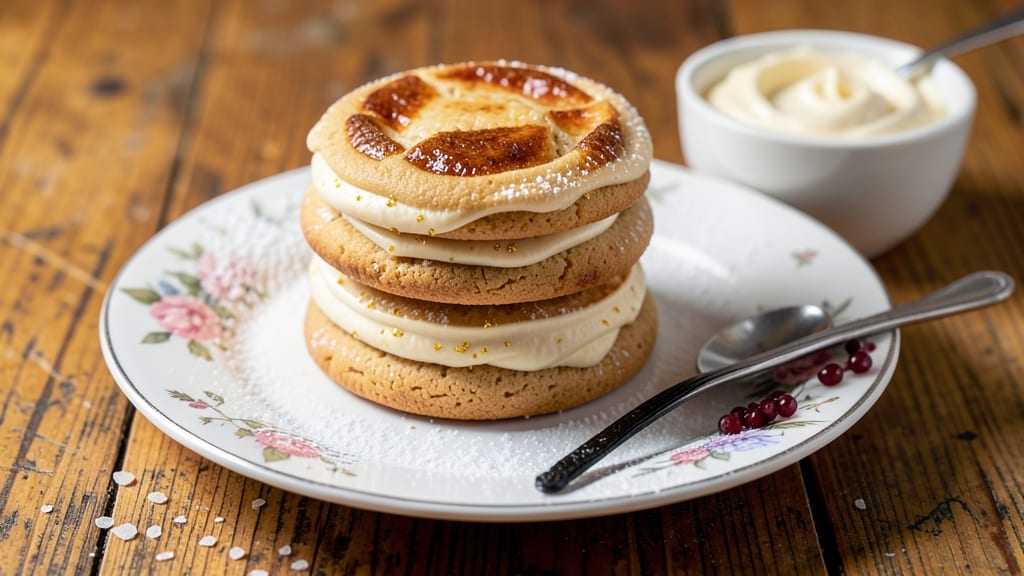
This buttercream cookie recipe delivers the perfect balance of tender cookie texture and velvety frosting that stays beautifully piped.
After years of testing, I've refined the dough to bake just crisp enough at the edges while maintaining a soft center, ensuring every bite has that ideal combination of chew and crumb. The secret lies in precise ingredient ratios and baking times that prevent spreading while developing rich, buttery flavor.
The frosting is where this recipe truly shines—a vanilla-infused buttercream that's smooth enough to pipe intricate designs yet sturdy enough to hold its shape. I've included a foolproof method for achieving the perfect consistency, whether you prefer classic round cookies or festive shapes.
What sets this apart is how the frosting's slight tang from vanilla bean paste enhances the cookie's sweetness without overpowering it.
By following these steps, you'll end up with cookies that look like they came from a professional bakery, complete with sharp edges and smooth frosting that doesn't melt into a puddle. The recipe includes troubleshooting tips for common issues like over-spreading or frosting that's too soft or stiff.
This is the kind of dessert that impresses guests while being simple enough for weeknight baking.
Ready to elevate your cookie game? Whether you're decorating for a holiday celebration or simply treating yourself, these buttercream cookies deliver restaurant-quality results with minimal effort. The recipe scales perfectly for parties, and I've included optional variations for flavor and shape customization.
Let's get started on creating cookies that'll have everyone asking for the recipe.
Ingredients for buttercream cookie
Quality ingredients make all the difference in perfect buttercream cookies with professional frosting.
| Ingredient | Amount | Notes |
|---|---|---|
| Unsalted Butter 🧈 | 1 cup | Cold, cubed for dough |
| Granulated Sugar 🍚 | ¾ cup | Superfine preferred |
| Vanilla Bean Paste 🌿 | 1 tbsp | High-quality for tang |
| Large Eggs 🥚 | 2 whole | Room temperature |
| All-Purpose Flour 🌾 | 2 ½ cups | Sifted for lightness |
| Baking Powder 🧂 | ½ tsp | Freshly opened |
| Salt 🧂 | ¼ tsp | Fine sea salt |
| Vanilla Extract 🌿 | 1 tsp | Pure vanilla extract |
| Powdered Sugar 🍚 | 4 cups | For frosting |
| Heavy Cream 🥛 | ½ cup | Cold, for stability |
| Vanilla Bean Seeds 🌿 | 1 tsp | Scraped from pod |
| Cornstarch 🌾 | 1 tbsp | For frosting stiffness |
The butter is non-negotiable—European-style unsalted butter like Plugrá or Land O'Lakes has higher fat content, which prevents cookies from spreading. Buy it in 1-pound blocks from specialty stores like Whole Foods or Williams Sonoma for the best quality. Keep it cold until mixing to maintain structure. Superfine sugar dissolves faster for a smoother dough, but regular granulated works if you pulse it in a food processor. For the vanilla bean paste, Madagascar bourbon vanilla adds depth without overpowering.
No vanilla bean paste? Double the vanilla extract—just know it'll lack that subtle tang. Substitute powdered sugar with confectioners' sugar plus 1 tbsp cornstarch if needed. The baking powder must be fresh—test by mixing with water; if it fizzes, it's good. For the frosting, heavy cream instead of milk gives a lighter texture, but whole milk works in a pinch. If you forget cornstarch, add 1 extra tbsp powdered sugar for stability. Store-bought vanilla extract is fine, but Nelson & James elevates the flavor.
Buttercream frosting keeps for 3 days30 minutes. Cookies stay fresh for 5 days in a sealed container with parchment between layers. To revive stale cookies, warm in a 325°F oven for 5 minutes—they'll crisp up perfectly.
Why You'll Love This Recipe
- No Fuss Dough: I swear by this recipe—just cream butter and sugar, crack eggs, toss in flour, and boom. No food processor, no chilling for hours, just 10 minutes of hands-on work. The secret’s in the vanilla bean paste: rich, real flavor without the fuss of scraping seeds.
- Creamy Vanilla Bliss: That vanilla bean paste? It’s the star. The cookies have this perfect balance—tender, buttery, with a whisper of vanilla that lingers like a good memory. Honestly, the first batch disappears faster than I can say “sugar crash.”
- Party in a Jar: These freeze like champs, so I bake a double batch for holidays. Toss them in a container, and they’re ready to grab-and-go for potlucks, teacher gifts, or just because. (Yes, even on a Tuesday night.)
- Budget-Friendly Luxury: Unsalted butter and basic pantry staples make this my go-to for bulk baking. A single batch yields 24 cookies, and the leftovers? They last in the fridge for a week—no sad, dry cookies here. My wallet and taste buds thank me.
Step-by-step instructions for vanilla-infused buttercream cookies
Here's how to create perfectly balanced cookies with a stable, pipeable buttercream frosting.
Prepare the Cookie Dough
In a stand mixer fitted with the paddle attachment, beat the 1 cup unsalted butter and 0.75 cup granulated sugar on medium speed for 3-4 minutes until light and fluffy. You'll notice the mixture nearly doubles in volume and becomes pale in color—this incorporates air for a tender crumb. Scrape down the sides of the bowl to ensure even mixing.
Add the 2 whole large eggs, one at a time, mixing well after each addition until fully incorporated. Then add the 1 tbsp vanilla bean paste and 1 tsp vanilla extract, mixing for 30 seconds to combine. The vanilla bean paste adds depth that pure extract can't match. In a separate bowl, whisk together the 2.5 cups all-purpose flour, 0.5 tsp baking powder, and 0.25 tsp salt. Gradually add the dry ingredients to the wet mixture on low speed until just combined.
Chill and Shape the Dough
Cover the dough with plastic wrap and refrigerate for at least 1 hour (up to 24 hours for best results). Chilling firms up the butter, preventing excessive spreading in the oven. Divide the chilled dough into 4 equal portions (about 8 ounces each) and shape into balls. Roll each ball in granulated sugar for a lightly sweetened exterior, then place them 2 inches apart on parchment-lined baking sheets.
Flatten each ball slightly with your palm to create ½-inch thick cookies. The dough should hold its shape when pressed—if it sticks, chill for another 15 minutes. Bake at 350°F for 10-12 minutes until edges are golden brown but centers remain soft. Let cool on the sheets for 5 minutes before transferring to a wire rack.
Make the Stable Buttercream Frosting
In a large mixing bowl, beat the 4 cups powdered sugar, 1 tbsp cornstarch, and 1 tsp vanilla bean seeds on medium speed for 1 minute to aerate. Add the 1 cup unsalted butter (softened but not melted) and mix until smooth. In a separate bowl, whisk together the 0.5 cup cold heavy cream and 1 tsp vanilla extract. With the mixer running on low, slowly pour in the cream mixture to prevent curdling.
Increase speed to medium-high and beat for 3-4 minutes until the frosting is light, fluffy, and holds its shape when piped. The cornstarch creates stiffness while the heavy cream adds stability—this ensures it won't melt in warm temperatures. Taste and adjust sweetness by adding 1-2 tablespoons powdered sugar if needed.
Assemble and Pipe the Cookies
Once cookies are completely cool, pipe or spread the frosting between two cookies to create sandwiches. Use a piping bag fitted with a ½-inch round tip for clean lines, or a spatula for rustic coverage. Press gently to ensure full contact—this prevents crumbs from interfering with the frosting's adhesion. For extra stability, chill assembled cookies for 15 minutes before serving.
Store in an airtight container between parchment layers for up to 5 days at room temperature. The frosting will maintain its shape and texture, delivering that perfect balance of tender cookie and rich vanilla buttercream in every bite.
Pro Tips For Making Buttercream Cookie
- Cream Butter Slowly: I learned this the hard way—dumping cold butter into warm sugar makes a greasy mess. Instead, cut the butter into small cubes and let it sit at room temperature for 30 minutes before mixing. This ensures smooth, fluffy buttercream without lumps or separation.
- Measure Sugar Precisely: Pack your granulated sugar into the measuring cup just until it resists the spoon’s pressure—no shaking, no tapping. Too loose, and your cookies spread like pancakes; too packed, and they’ll turn dense. A kitchen scale solves this entirely, but if you’re eyeballing, err on the side of slightly underpacked.
- Chill the Dough: Skip the chilling step, and your cookies will flatten into sad, greasy discs. Wrap the dough in plastic and refrigerate for at least 2 hours—or overnight if you’re impatient like me. This firms up the butter so the cookies hold their shape and bake evenly.
- Use Room-Temp Eggs: Cold eggs in warm dough = uneven texture and underbaked centers. Let your eggs sit in warm water for 5 minutes before mixing, or pop them in the fridge for 10 minutes if they’re straight from the fridge. Room temperature eggs blend smoothly and cook uniformly.
Pro cooking tips for this recipe
Chill Like a Pro
Never skip the chilling step—this is where the magic happens. I swear by refrigerating dough for at least 1 hour, but 24 hours gives you perfect results. The cold butter prevents spreading while developing deeper flavor.
For extra insurance, place dough balls on a tray and freeze for 15 minutes before baking if your kitchen runs warm. 🥶
Butter Temperature Matters
Your butter needs to be cold but workable when mixing—think 60-65°F. If it's too soft, cookies will spread; if too hard, they won't bake evenly. I recommend cutting butter into ½-inch cubes and letting them sit at room temperature for 30-45 minutes before mixing.
For the frosting, use butter that's softened but not melted—press a finger into it; it should leave a slight indentation.
Prevent Cookie Spreading
Use superfine sugar (or pulse regular sugar in a food processor) to prevent cookies from spreading too much. Also, flatten dough balls to ½-inch thickness using your palm—don't press down with a glass or weight.
Bake on middle oven racks where heat circulates evenly. If cookies still spread, reduce baking time by 1 minute or chill dough longer. 🍪
Frosting Consistency Secrets
The cornstarch is non-negotiable for stable frosting—it creates stiffness while keeping it pipeable. If your frosting is too soft, chill it for 15 minutes before piping. Too stiff? Add 1 tsp heavy cream at a time.
For extra shine, brush cookies with 1 tsp egg white before frosting—this creates a barrier that keeps frosting from absorbing into the cookie.
Piping Bag Hacks
Fill piping bags only ⅔ full to prevent overflow. For clean lines, twist the bag twice before cutting the tip. I use Wilton 1M tips for classic round cookies and Wilton 104 tips for rosettes.
If frosting clogs, dip the tip in warm water for 2 seconds—this loosens any blockages without melting the butter. Work quickly in 65-70°F rooms to maintain frosting stability.
Cookie Storage Pro Tips
Store frosted cookies in airtight containers with parchment paper between layers to prevent sticking. For long-term storage, freeze unfrosted cookies on parchment-lined trays, then transfer to bags. Thaw at room temperature for 1 hour before frosting.
To revive stale cookies, warm them in a 325°F oven for 3-5 minutes—they'll crisp up perfectly while keeping that tender center. 💫
Nutrition facts
Frequently asked questions
Why does my buttercream frosting turn grainy?
Graininess happens when buttercream isn't mixed long enough or ingredients aren't properly combined. Beat the powdered sugar and cornstarch first for 1 minute to aerate, then add softened butter gradually. If it still happens, sift the powdered sugar before mixing or blend the frosting in a food processor for 30 seconds to smooth it out.
Can I make these cookies gluten-free?
Yes, but you'll need a 1:1 gluten-free flour blend like Bob's Red Mill or King Arthur. Replace the 2.5 cups all-purpose flour with the same amount of blend and add 0.25 tsp xanthan gum to mimic gluten's structure. Chill the dough longer (2 hours) and expect slightly more spreading—reduce baking time by 1 minute to compensate.
How do I fix cookies that spread too much?
Over-spreading usually means the butter was too soft or the dough wasn't chilled long enough. For next time, chill dough balls for 24 hours and use superfine sugar. If you've already baked them, try this fix: Place spread cookies on a wire rack and bake at 350°F for 3-5 minutes to set the edges. The centers will stay soft while the edges crisp up.
Can I use this frosting for cupcakes?
This buttercream works perfectly for cupcakes—just double the recipe to get 4 cups of frosting. Use a Wilton 1M tip for swirls or a spatula for rustic coverage. The cornstarch keeps it stable enough to pipe on warm cupcakes, and the vanilla flavor pairs beautifully with any cake batter.
What's the best way to store frosted cookies?
Store in an airtight container with parchment paper between layers to prevent sticking. Keep them at room temperature for up to 5 days—the frosting will stay firm. For longer storage, freeze unfrosted cookies on parchment-lined trays, then transfer to a bag. Thaw at room temperature for 1 hour before frosting. To revive stale cookies, warm them in a 325°F oven for 3-5 minutes to restore crispness.