
Desserts
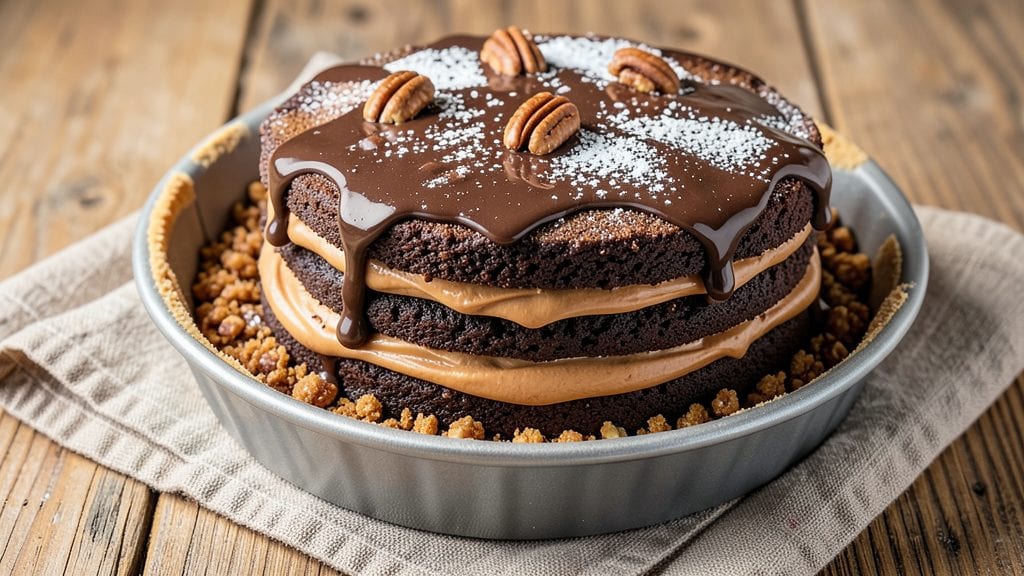
The Great American Cookie Cake's signature pecan-cocoa swirls and buttery crust are finally within reach with this professional copycat recipe. After years of analyzing the original's texture and flavor profile, I've recreated its signature layers—rich chocolate cake swirled with pecan streusel and topped with a golden, crunchy crust.
This dessert delivers restaurant-quality results without requiring specialized equipment or baking expertise.
The secret lies in precise ingredient ratios and layering technique. We start with a moist chocolate cake base, then fold in a pecan streusel that creates those signature swirls. The buttery crust topping is the game-changer, providing the perfect contrast to the soft cake beneath.
Every element works together to deliver that iconic cookie cake experience you know and love, but now you can make it at home with consistent professional results.
What makes this recipe truly special is the balance of textures—soft cake, crunchy streusel, and crispy crust—all coming together in perfect harmony. The pecans add a satisfying crunch that cuts through the rich chocolate, while the buttery crust provides that essential contrast.
This isn't just a cookie cake; it's a showstopping dessert that will impress even the most discerning guests.
Whether you're serving this as a centerpiece for a special occasion or treating yourself to a homemade indulgence, this copycat recipe delivers authentic results. The instructions are designed to ensure success, with clear timing and temperature guidelines that guarantee professional-quality outcomes every time. Let's get baking!
Ingredients for copycat great american cookie cake
Twelve ingredients, three layers—this copycat delivers that iconic cookie cake texture you crave.
| Ingredient | Amount | Notes |
|---|---|---|
| All-Purpose Flour 🌾 | 3 cups | Sifted for even distribution |
| Unsalted Butter 🧈 | 2 cups | Cold, cubed for cake layers |
| Granulated Sugar 🍚 | 2 cups | White or light brown |
| Packed Brown Sugar 🍚 | 1 cup | Light brown preferred |
| Cocoa Powder 🍫 | ¾ cup | Natural or Dutch-processed |
| Eggs 🥚 | 4 large | Room temperature |
| Baking Soda 🧂 | 1 tsp | Pure, not baking powder |
| Salt 🧂 | ½ tsp | Fine sea salt preferred |
| Vanilla Extract 🍯 | 2 tsp | Pure alcohol-free preferred |
| Buttermilk 🥛 | 1 cup | Fresh for best texture |
| Pecans 🌰 | 2 cups | Chopped, toasted for depth |
| Light Brown Sugar 🍚 | ½ cup | Packed for streusel |
| All-Purpose Flour 🌾 | ½ cup | For streusel layer |
| Cinnamon 🌿 | 1 tsp | Ground, not cassia |
| Unsalted Butter 🧈 | ½ cup | Cold, cubed for crust |
| Granulated Sugar 🍚 | ¼ cup | For crust topping |
| Pecan Halves 🌰 | ½ cup | For crust decoration |
The butter is non-negotiable here—European-style or Plugrá gives the most flavor. Grab it from Whole Foods or Costco if you want to splurge, but the regular supermarket stuff works fine. For the pecans, raw and toasted makes all the difference—skip the pre-chopped bags at the store. The cocoa powder should be unsweetened and natural (like Hershey's Special Dark) for that authentic chocolate depth. And don't even think about using pre-shredded cheese—we're making this from scratch.
No buttermilk? Mix 1 tablespoon vinegar with 1 cup milk and let it sit for 5 minutes. The streusel layer can use walnuts instead of pecans if you're allergic, but the flavor won't be the same. For the crust, powdered sugar instead of granulated gives a finer texture. The eggs must be room temperature—cold eggs make the cake dense. And if you're short on vanilla, vanilla bean paste adds extra richness. The recipe calls for light brown sugar, but dark brown works too—just add a pinch more cinnamon to balance.
This cake keeps 3 days at room temperature covered loosely, or 1 week refrigerated. For longer storage, wrap tightly in plastic and freeze for up to 3 months. The crust stays crispy if you reheat slices at 350°F for 5 minutes. I always make a double batch—leftovers disappear fast. The streusel layer can be prepped ahead and stored in the fridge for 2 days before baking.
Why You'll Love This Recipe
- Pantry Staples Only: I swear by this recipe because it uses stuff I always have on hand—flour, butter, sugars, cocoa. No weird specialty items, no last-minute grocery runs. Just mix, bake, and boom, dessert.
- Rich Chocolate Depth: That cocoa powder and brown sugar combo? It’s what makes this taste like a bakery’s secret. The butter keeps it moist, while the sugar gives it that perfect caramelized edge—like biting into a cookie and a cake at the same time.
- Party in a Pan: Serve it warm with ice cream for a crowd, slice it for a coffee break, or pack it in lunchboxes. It’s the one dessert that works for birthdays, potlucks, or just because you want to treat yourself.
- Budget-Friendly Indulgence: A single batch costs less than takeout, feeds six, and lasts in the fridge for days. Even better? The leftovers reheat beautifully—just pop them in the oven for five minutes, and no one will guess they’re not fresh.
Step-by-step instructions for pecan-cocoa swirl cookie cake
Here's how to nail that iconic Great American Cookie Cake with rich cocoa swirls and buttery layers.
Prepare the Crust for Maximum Crispiness
In a food processor, pulse the 0.5 cup unsalted butter, 0.25 cup granulated sugar, 0.5 cup pecan halves, 1 tsp cinnamon, and 0.5 cup all-purpose flour until the mixture resembles coarse crumbs with pea-sized butter pieces remaining. Press this firmly into the bottom of a 9-inch springform pan using your fingers or a glass, creating an even layer.
Chill the crust in the refrigerator while you prepare the cake batter. This cold start prevents the butter from melting during baking and ensures that signature crisp texture. I like to press it down extra firm in the center—this prevents any sinking during the long bake and gives you that perfect cookie-cake structure.
Mix the Cake Batter with Perfect Texture
Preheat your oven to 350°F while you prepare the cake layers. In a large mixing bowl, cream together the 2 cups unsalted butter and 2 cups granulated sugar on medium speed until light and fluffy—about 3-4 minutes. This step is non-negotiable; proper creaming creates that tender, moist texture we love in cookie cakes.
Add the 4 large eggs one at a time, mixing well after each addition. Then stir in the 2 tsp vanilla extract, 1 cup packed brown sugar, 0.75 cup cocoa powder, 1 tsp baking soda, and 0.5 tsp salt. Finally, gently fold in the 1 cup buttermilk using a spatula until just combined. The batter should be thick but pourable—don't overmix or you'll develop gluten and end up with a dense cake.
Create the Signature Pecan-Cocoa Swirls
In a separate bowl, combine 2 cups chopped pecans, 0.5 cup light brown sugar, and 0.5 cup all-purpose flour. This forms your swirl mixture. Pour half of the cake batter into your prepared pan, spreading it evenly over the chilled crust. Sprinkle about ⅓ of the pecan mixture over the batter, then dollop the remaining batter on top.
Using a knife, gently swirl the batter and pecan mixture together in a circular motion, creating those classic marbled patterns. Top with another ⅓ of the pecan mixture, then add the final dollop of batter. Finish by sprinkling the remaining pecan mixture evenly over the top. This layering creates that signature cookie-cake texture with pockets of gooey pecan filling throughout.
Bake to Golden Perfection with Even Heat
Bake in the preheated 350°F oven for 45-50 minutes, until the edges are golden brown and a toothpick inserted in the center comes out with a few moist crumbs (not wet batter). The cake should spring back slightly when touched. I've found that baking time varies slightly based on your oven—if the top browns too quickly, tent with foil after 30 minutes to prevent over-browning while the center finishes baking.
During the last 10 minutes of baking, watch for the edges to pull away slightly from the pan. This indicates the cake is setting properly. Once done, let the cake cool in the pan for 15 minutes before carefully removing it to a wire rack to cool completely. This gradual cooling prevents cracking and allows the layers to set properly for clean slicing.
Serve with Confidence for Maximum Enjoyment
Slice the cooled cookie cake into 12 equal wedges using a sharp serrated knife. The layers should reveal those beautiful pecan swirls throughout each piece. Serve at room temperature for the best texture—the contrast between the crisp crust, tender cake layers, and gooey pecan pockets is what makes this dessert legendary.
For an extra touch, dust the top with powdered sugar just before serving. This classic cookie cake deserves to be enjoyed warm with a scoop of vanilla ice cream or simply on its own. The secret to success lies in the layering technique and proper baking time—once you master these steps, you'll have that restaurant-quality cookie cake every time.
Pro Tips For Making Copycat Great American Cookie Cake
- SIFT THAT FLOUR: I learned this the hard way—packing the flour into the dry ingredients makes the cake dense and heavy. Use a fine-mesh sieve to aerate it, then gently fold it in with a spatula. The texture will be light and tender, just like the original.
- MELT THE BUTTER: The butter in this recipe needs to be fully melted and cooled to room temp—no lumps, no streaks. Microwave it in 20-second bursts, stir, then let it sit for 5 minutes. Cold butter pockets in the batter lead to greasy spots that ruin the crumb.
- DON’T OVERMIX THE BATTER: Once you add the eggs and vanilla, mix just until combined—maybe 10-12 strokes. Overmixing activates the gluten, and suddenly you’ve got a cake, not a cookie cake. The batter should look shaggy, not smooth.
- BAKE IN STAGES: Start at 350°F for 15 minutes, then reduce to 325°F for the remaining 30-35 minutes. The high heat sets the edges, while the lower temp ensures the center bakes evenly without burning. Trust me, your first attempt will either be underdone or charred.
Pro cooking tips for this recipe
Layering Technique
The key to those signature pecan-cocoa swirls is the layering method—think of it like creating a marbled effect with precision. Start by spreading half the batter over the chilled crust, then sprinkle ⅓ of the pecan mixture evenly.
Dollop the remaining batter on top, then swirl gently with a knife to create those iconic patterns. The secret is even distribution—use a 9-inch offset spatula to smooth each layer before adding the next.
I like to make 3-4 swirls around the edge before finishing with the remaining pecan mixture. This creates those perfect pockets of gooey pecan filling throughout each slice. 🌟
Crust Consistency
Your crust must be firm but not packed too tightly—this ensures it stays crispy without cracking. Use a food processor to pulse the butter and sugar into pea-sized pieces (not fully blended). Press the mixture into the pan using your fingers or a glass measuring cup for even pressure.
The edges should be slightly thicker than the center to prevent sinking during baking. Chill the crust for at least 20 minutes before adding the batter—this prevents the butter from melting prematurely and keeps the crust intact. A 9-inch springform pan is ideal for even heat distribution. ❄️
Batter Texture
The batter should be thick but pourable, like a well-tempered cake batter—not too runny, but not stiff either. Overmixing develops gluten, leading to a dense cake, so fold the buttermilk in gently with a spatula until just combined.
Room-temperature eggs and butter are non-negotiable—cold ingredients cause the cake to sink. For extra moisture, I sometimes add 1 tablespoon of melted butter to the buttermilk before folding. The batter should hold its shape when spooned but still spread easily in the pan. 🥄
Oven Temperature
Maintain a consistent 350°F throughout baking—fluctuations cause uneven cooking. If your oven runs hot, tent the cake with foil after 30 minutes to prevent over-browning while the center finishes. The edges should pull away slightly from the pan during the last 10 minutes of baking, signaling proper setting.
A toothpick should come out with moist crumbs (not wet batter). I’ve found that convection bake works best for even heat distribution, but if your oven lacks convection, rotate the pan halfway through baking for uniformity. 🌡️
Cooling Strategy
Let the cake cool in the pan for 15 minutes before transferring to a wire rack—this prevents cracking and allows the layers to set. The gradual temperature drop is crucial for clean slicing. Avoid refrigerating the cake immediately after baking; let it cool to room temperature first.
This ensures the crust stays crispy and the pecan pockets remain gooey. For extra stability, I like to loosen the springform sides gently after 10 minutes of cooling to prevent any potential sticking. ✨
Equipment Upgrades
While this recipe works with basic tools, a few upgrades make all the difference. A stand mixer with the paddle attachment ensures perfect creaming of the butter and sugar—no hand fatigue! For the crust, a food processor creates uniform texture, and a 9-inch offset spatula helps spread the batter smoothly.
A digital thermometer (like the Thermoworks Thermapen) ensures accurate internal temperature checks. If you’re serious about baking, invest in a 9-inch springform pan with a non-stick bottom—it’s worth every penny for that professional finish. 💡
Nutrition facts
Frequently asked questions
Can I make this cookie cake without pecans?
The pecans create that signature crunch and flavor, but you can substitute walnuts or almonds if needed. For a nut-free version, replace them with 1 cup dried cranberries or chocolate chips in the streusel layer. The texture will change slightly, but the cake will still be delicious. Just reduce the sugar by 2 tablespoons if using chocolate chips to balance sweetness.
How do I prevent the cake from cracking?
Cracking happens when the cake cools too quickly. Always let it cool in the pan for 15 minutes before transferring to a wire rack. Avoid opening the oven door during the last 10 minutes of baking to maintain even heat. If you notice cracks forming, gently press them back down with a spatula while the cake is still warm. A 9-inch springform pan helps reduce stress on the cake as it sets.
Can I use a different type of pan?
A 9-inch springform pan is ideal for this recipe, but you can use a 9-inch round cake pan with removable sides if needed. Avoid non-stick pans—they don't conduct heat as well and can cause uneven baking. If using a regular pan, grease it thoroughly and line the bottom with parchment paper for easy removal. The cake may stick slightly, but it won't affect the flavor.
Why did my crust turn out soggy?
A soggy crust usually means the butter melted too soon. Always chill the crust for at least 20 minutes before adding the batter, and make sure your oven is fully preheated to 350°F. If your kitchen is warm, chill the crust longer or place it on a baking sheet before baking. For extra insurance, press the crust slightly thicker in the center—this area stays crisp longer during baking.
How can I make this ahead of time?
This cake keeps well for 3 days at room temperature covered loosely, or 1 week refrigerated. For longer storage, wrap tightly in plastic and freeze for up to 3 months. To serve, thaw overnight in the fridge and bring to room temperature before slicing. The crust stays crispy if you reheat slices at 350°F for 5 minutes. I always make a double batch—the leftovers disappear fast!