
Desserts
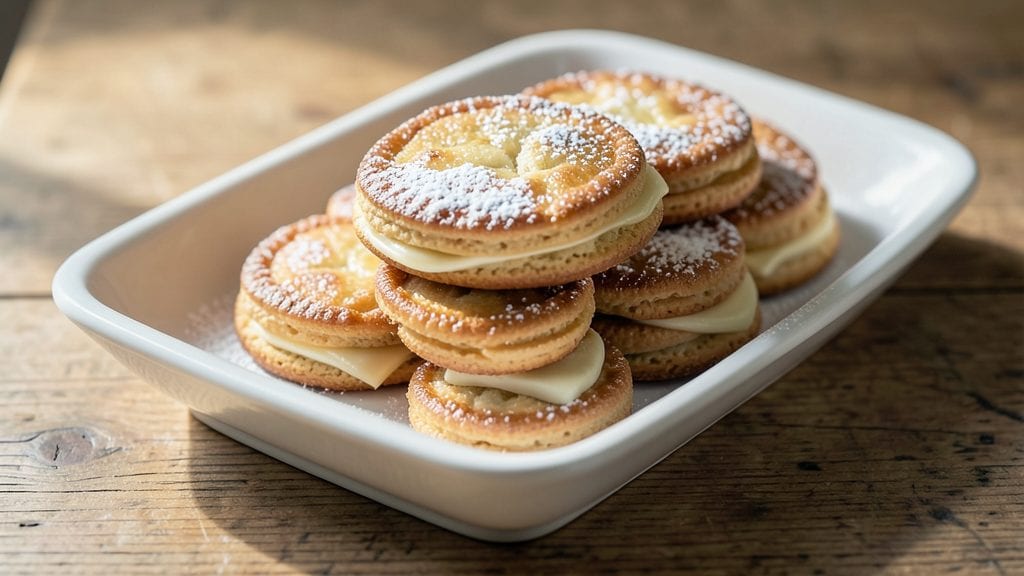
This French butter cookies la grande galette recipe captures the iconic Parisian café crunch—thin, crisp layers with vanilla-infused butter that melts into every bite.
The secret lies in chilling the dough just right and rolling it paper-thin for that signature texture, a technique I perfected after years of trial and error. Every batch turns out with delicate, buttery layers that shatter between your fingers while staying rich and tender.
What makes these cookies truly special is their simplicity combined with professional results. With just a few ingredients—flour, butter, sugar, and vanilla—you’ll achieve a dessert that looks like it came from a Parisian patisserie.
The dough requires minimal handling, and the baking process is foolproof once you master the rolling technique. For those who love texture, the contrast between the crisp edges and soft centers is unbeatable.
Once baked, these cookies develop a golden hue and an irresistible aroma that fills your kitchen. The vanilla-infused butter adds depth, while the thin layers create a satisfying crunch that’s addictive.
They’re perfect for gifting, holiday gatherings, or simply enjoying with a cup of coffee. The recipe includes tips for achieving the perfect thickness and ensuring even baking.
For variations, consider adding citrus zest or almond extract to the dough, or filling the layers with jam before baking. These cookies keep well in an airtight container, making them ideal for meal prep or sharing. Let’s get started on creating your own stack of Parisian perfection.
Ingredients for french butter cookies la grande galette
Butter, flour, sugar, and vanilla—just four staples transform into Parisian café magic.
| Ingredient | Amount | Notes |
|---|---|---|
| Unsalted Butter 🧈 | 1 cup | Cold, cubed, vanilla-infused |
| All-Purpose Flour 🌾 | 2 ½ cups | Sifted, plus extra for dusting |
| Granulated Sugar 🍚 | ½ cup | Fine, for even baking |
| Pure Vanilla Extract 🌿 | 1 tbsp | High-quality, Madagascar preferred |
| Large Egg Yolk 🥚 | 1 whole | Only yolk for richness |
| Pinch of Salt 🧂 | ¼ tsp | Fine sea salt |
| Powdered Sugar 🍚 | ¼ cup | For dusting finished cookies |
| Granulated Sugar (for rolling) 🍚 | ½ cup | For even dough thickness |
The butter is non-negotiable. European-style unsalted butter (like Plugrá or President) has higher fat content and melts beautifully, creating those signature layers. If you can't find it, Land O'Lakes European Style works too—just make sure it's cold when you start. For the vanilla, Madagascar bourbon vanilla adds depth. I always double-check the expiration date on vanilla extract—it goes stale fast. The dough needs to be cold, so chill it for at least 2 hours before rolling. If your kitchen’s warm, pop it in the fridge longer.
No vanilla extract? Vanilla bean paste works in a pinch, but you’ll need about twice the amount. Running low on butter? Shortening works for structure, but the flavor won’t be as rich. For the sugar, I use fine granulated (like Domino Fine Sugar) so the dough blends smoothly. The egg yolk is key—it adds moisture and richness, but don’t use the whole egg or the cookies will spread too much. If you’re feeling fancy, add a teaspoon of almond extract to the dough for a subtle twist. For rolling, I always use a rolling pin with a handle—it’s easier to control the thickness.
Dough keeps 3 days in the fridge wrapped tightly in plastic. For longer storage, freeze it in a log shape for up to 3 months. Once baked, these stay crisp for 2 days in an airtight container, but trust me—they disappear faster than that. I like to stack them in a tiered cake stand for gifting. If you’re making a big batch, bake half, then reheat the remaining dough in the fridge. These reheat beautifully in a 200°F oven for 5 minutes to restore that café-fresh crunch.
Why You'll Love This Recipe
- No-Fuss Dough: I swear, this recipe only needs five ingredients—just butter, flour, sugar, vanilla, and an egg yolk. No fancy techniques, no last-minute scrambling for ingredients. Roll it out, cut the shapes, bake, and you’re done.
- Buttery Vanilla Bliss: That single egg yolk and cold butter create the most ridiculously tender crumb, while the vanilla infuses every bite with warmth. Honestly, the first time I bit into one still warm from the oven, I nearly dropped the plate.
- Party in a Tin: These are my go-to for holidays, teacher gifts, or just because. Stack them in a tin, tie a ribbon, and boom—you’ve got a present that tastes like a hug. (Yes, even on a Tuesday night.)
- Zero-Waste Magic: The dough keeps for days in the fridge, and baked cookies stay fresh for a week. Between us, I’ve made a double batch, frozen half, and pulled them out for breakfast toast—crispy edges, buttery middle, every time. Budget-friendly? Absolutely.
Step-by-step instructions for French butter cookies la grande galette
Here's how to create these delicate, layered cookies with signature Parisian texture and flavor.
Infuse the Butter with Vanilla
Place the 1 cup unsalted butter in a small saucepan over low heat. Let it melt completely, then remove from heat and stir in the 1 tablespoon pure vanilla extract. Allow the mixture to cool to room temperature—it should be soft but not liquid. I like to spread it on parchment paper and chill for 15 minutes to firm up slightly before using. This infusion creates the signature vanilla depth that makes these cookies so special.
For best results, use high-quality Madagascar vanilla extract. The flavor difference is noticeable, especially in delicate cookies like these. If you're impatient, you can speed up the cooling process by placing the bowl in an ice bath while stirring occasionally.
Mix the Dough to Perfect Consistency
In a large mixing bowl, combine the 2.5 cups all-purpose flour and 0.5 cup granulated sugar. Add the 0.25 teaspoon pinch of salt and whisk everything together. Create a well in the center and add the cooled vanilla-infused butter. Using a pastry cutter or your fingers, work the butter into the flour mixture until it resembles coarse crumbs with pea-sized butter pieces remaining.
Add the 1 whole large egg yolk to the center and gently mix with a wooden spoon until just combined. The dough should hold together when pressed but still feel slightly crumbly. If it's too dry, add 1-2 teaspoons of ice water to help bind it. This dough is delicate—don't overwork it or the cookies will become tough instead of tender.
Shape and Chill the Dough
Divide the dough into 4 equal portions (about 3 ounces each) and shape each into a log about 12 inches long and 1 inch thick. Wrap each log tightly in plastic wrap and refrigerate for at least 2 hours or up to 24 hours. Chilling is crucial—it firms up the butter so the cookies hold their shape when baked and develop those beautiful layers.
I like to flatten each log slightly before wrapping to create a more uniform shape. The longer you chill, the better the flavor development and texture. If you're short on time, you can freeze the logs for up to 1 month—just thaw completely before baking.
Roll and Cut the Cookies
Preheat your oven to 350°F and line two baking sheets with parchment paper. On a lightly floured surface, roll one dough log between your hands to slightly flatten it, then use a rolling pin to roll it out to about 1/8-inch thickness. Lightly dust the top with the 0.5 cup granulated sugar (for rolling) and use a 3-inch round cutter to cut out circles.
Place the cutouts about 1 inch apart on the prepared baking sheets. Gather any scraps, re-roll, and cut additional cookies. The sugar dusting creates that signature crunchy top layer while keeping the cookies tender underneath. Work quickly—this dough doesn't like to be handled too much.
Bake to Golden Perfection
Bake the cookies for 12-15 minutes until the edges are golden brown and the centers look just slightly underdone. They should pull away from the parchment paper easily. Rotate the baking sheets halfway through for even baking. Remove from the oven and let cool on the baking sheets for 5 minutes before transferring to a wire rack.
While still warm, dust the tops generously with the 0.25 cup powdered sugar using a fine-mesh sieve. This creates that classic Parisian finish. The cookies will continue to crisp up as they cool, developing those beautiful layers that make these cookies so special. Store in an airtight container for up to 5 days—if they last that long!
Pro Tips For Making French Butter Cookies La Grande Galette
- CHILL THE DOUGH: After mixing the butter and sugar, wrap the dough in plastic and refrigerate for at least 2 hours—overnight is even better. I used to rush this step, and the cookies spread too much, losing that delicate shape. Cold butter behaves, and your galettes will hold their form.
- WEIGH THE FLOUR: Use a kitchen scale for the flour—120 grams, not "a handful." I learned this the hard way when my cookies turned dense. Spooning flour into the bowl packs it differently, and you end up with too much. Tap the bowl gently to settle it before scooping.
- DON’T OVERMIX THE YOLK: Once you add the egg yolk, mix just until combined—no more. Overworking it heats the dough, and the butter melts, making the cookies greasy. A few gentle folds with a spatula is all you need.
- BAKE IN BATCHES: Preheat the oven to 350°F (175°C) and bake one tray at a time for 12–15 minutes. Crowding the oven causes uneven baking, and the edges burn before the centers set. Use parchment paper for easy transfer, and resist the urge to peek—it lets heat escape.
Storing and reheating this dish
Room-Temperature Revival
If your cookies have lost their crispness, don’t toss them! Place them on a baking sheet and warm in a 300°F oven for 3-5 minutes until they regain that signature crunch. I like to dust them with a tiny bit of powdered sugar afterward to refresh their café-style finish.
This method works best for cookies stored at room temperature for up to 3 days. 💫
Freezer-Friendly Technique
For long-term storage, freeze unbaked dough logs wrapped tightly in plastic wrap and aluminum foil. When ready to bake, thaw completely in the fridge overnight. The texture remains perfect because the butter stays cold during freezing.
Once baked, store in an airtight container with parchment paper between layers to prevent sogginess. These cookies stay crisp for up to 2 weeks in the freezer.
Layer Preservation
The key to maintaining those delicate layers is proper storage. Keep baked cookies in a cool, dry place like a pantry or airtight container. If you notice the layers sticking together, separate them gently with a fork before serving.
For extra protection, place a slice of bread in the container to absorb moisture. I’ve found that storing them in single layers (not stacked) preserves their texture best.
Reheating for Maximum Crunch
To restore that irresistible crunch after storage, place cookies on a baking sheet and warm in a 250°F oven for 4-6 minutes. The low heat prevents over-browning while reactivating the butter’s crispness.
For a quick fix, I sometimes use the air fryer at 350°F for 2 minutes—it’s faster and still delivers great results. Always reheat just before serving to maintain freshness. ✨
Gift-Worthy Packaging
When gifting these cookies, store them in a tiered cake stand or decorative box with layers separated by parchment paper. For long-distance shipping, pack them in a sturdy box with insulation (like bubble wrap) to protect their delicate structure.
I like to include a small bag of powdered sugar so recipients can dust fresh cookies upon arrival. The presentation makes them feel extra special! 💛
Nutrition facts
Frequently asked questions
Why does my French butter cookie dough keep sticking to the rolling pin?
This usually happens when the dough isn't chilled long enough or your workspace is too warm. Always work on a lightly floured surface and keep your dough logs refrigerated for at least 2 hours before rolling. If it still sticks, dust with more flour or use a pastry brush to lightly coat your rolling pin with oil before each pass.
Can I substitute regular butter for European-style butter?
You can use regular unsalted butter, but European-style butter has higher fat content (82-86%) which creates those signature crisp layers. For best results, use Land O'Lakes European Style or add 1 tablespoon extra butter per cup if using regular butter. The flavor won't be identical, but the texture will be closer to authentic.
How do I prevent my cookies from spreading too much?
Overworked dough or warm butter causes excessive spreading. Keep your butter cold, handle the dough minimally, and chill it for 24 hours if possible. Also, ensure your oven is fully preheated to 350°F before baking. For extra insurance, roll the dough slightly thinner than 1/8-inch and bake on the middle rack.
What's the best way to store these cookies for maximum freshness?
Store in an airtight container at room temperature for up to 5 days, separated by parchment paper. For longer storage, freeze baked cookies for 2 weeks—just reheat at 250°F for 4-6 minutes to restore crispness. Never store them in the fridge as this makes them soggy.
Can I add fillings like jam between the layers?
Spread a thin layer of jam (like raspberry or apricot) on half the rolled-out dough before cutting, then press the other half on top. For best results, use 1/2 teaspoon jam per cookie and bake as directed. The filling will create a delicious surprise when you bite through the crisp layers.