
Desserts
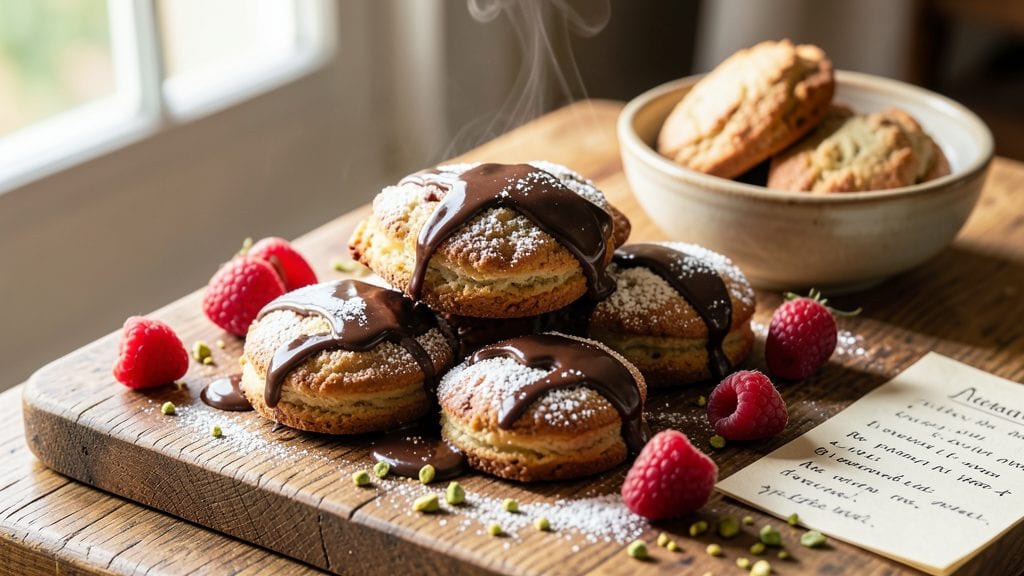
This Polish kolaczki cookie recipe brings the nostalgic sweetness of traditional Polish baking to your kitchen table, where buttery swirls of vanilla dough meet a crunchy nut topping. 🌟 I first discovered these cookies during a visit to a Polish bakery, where the aroma of warm, spiced dough filled the air and left me craving more.
The secret lies in the delicate balance between tender dough and the nutty crunch that defines their texture.
What makes these kolaczki special is their versatility—whether you prefer classic poppy seed filling, dried fruit compote, or a simple vanilla swirl, the dough remains the same. The recipe uses a simple shortcrust base, enriched with butter and vanilla, which is rolled, filled, and baked to golden perfection.
The nut topping adds a satisfying crunch that contrasts beautifully with the soft, buttery interior.
By the time you pull these from the oven, you’ll have cookies that look like they belong in a Polish bakery window—golden, swirled, and topped with a nutty crunch. They’re perfect for holidays, gift-giving, or simply treating yourself to a taste of tradition.
The dough is easy to work with, and the process is straightforward, making it ideal for both beginners and experienced bakers.
Serve them warm with a cup of coffee or tea, or let them cool slightly for a more structured bite. These kolaczki are a celebration of Polish baking, and every bite carries a little piece of that cultural warmth. Let’s get started on making them!
Ingredients for polish kolaczki cookie
Buttery dough, nutty crunch, and vanilla swirls—just 12 ingredients for bakery-style Polish kolaczki.
| Ingredient | Amount | Notes |
|---|---|---|
| All-Purpose Flour 🌾 | 3 cups | Sifted for light texture |
| Unsalted Butter 🧈 | 1 cup | Cold, cubed for dough |
| Granulated Sugar 🍚 | ½ cup | White sugar preferred |
| Vanilla Extract 🥛 | 1 tbsp | Pure vanilla preferred |
| Large Eggs 🥚 | 2 whole | Room temperature |
| Salt 🧂 | ½ tsp | Fine sea salt |
| Poppy Seeds 🌱 | ½ cup | For filling (optional) |
| Honey 🍯 | ¼ cup | For filling (optional) |
| Chopped Walnuts 🥜 | 1 cup | For nut topping |
| Ground Cinnamon 🌿 | ½ tsp | For dough flavor |
| Powdered Sugar 🍚 | ¼ cup | For dusting |
| Heavy Cream 🥛 | ¼ cup | For brushing (optional) |
The butter is non-negotiable here—European-style unsalted butter (like Plugrá or Kerrygold) gives the richest flavor. Grab it from the dairy section, not the baking aisle. The flour should be all-purpose, but King Arthur or Gold Medal brands work best—they’re consistent and light. Poppy seeds? Bob’s Red Mill has the best quality, but any organic brand will do. Toast the nuts lightly before chopping for extra flavor—just spread them on a baking sheet at 350°F for 5 minutes. The vanilla extract should be pure, not imitation—Nielsen-Massey is my go-to.
No poppy seeds? Sesame or sunflower seeds work in a pinch, but the flavor won’t be the same. Running out of honey? Maple syrup or apricot jam adds sweetness, though honey’s floral notes are classic. The dough can be made ahead—wrap it in plastic and refrigerate for up to 3 days. For the nut topping, you can swap walnuts for pecans or almonds, but walnuts have that perfect crunch. The powdered sugar dusting? Confectioners’ sugar is a must—it dissolves beautifully for that bakery finish.
Dough keeps 3 days in the fridge wrapped tightly, or 6 months frozen in a sealed bag. The baked kolaczki stay fresh for 5 days in an airtight container, but they’re best enjoyed warm. I like to freeze unbaked dough rounds—just shape, fill, and bake straight from frozen (add 2-3 minutes to baking time). The nut topping can be prepped ahead too—store it in a jar for 1 week at room temperature.
Why You'll Love This Recipe
- No Fuss, Big Payoff: I swear by this dough—just mix, chill, roll, cut, bake. No piping bags, no fussing with intricate shapes. The butter gets cold, the flour comes together like a dream, and suddenly you’ve got these golden, buttery rounds that taste like nostalgia in every bite.
- Buttery Vanilla Magic: That vanilla extract? It’s not just a drop—it’s the star. Combined with the rich, creamy butter and just the right touch of sugar, these cookies have this warm, caramel-like depth that makes them impossible to resist. Honestly, I’ve seen people lick the dough before baking.
- Party in a Box: Freeze the dough in balls, and boom—you’ve got a backup stash for last-minute gatherings. Or shape them into little stars for Christmas, tiny hearts for Valentine’s Day. My kids love decorating them with sprinkles (yes, even the ones who claim they don’t like cookies).
- Budget-Friendly Comfort: Five ingredients, zero weird substitutes. The butter and sugar do all the heavy lifting, and eggs bind it together without breaking the bank. Plus, these keep for days in an airtight container—so you’re not scrambling to use them up before they disappear.
Step-by-step instructions for Polish kolaczki cookies
Here's how to make these rich, buttery swirl cookies with a perfect nutty crunch.
👨🍳 Step 1: Make the Dough Base
In a large mixing bowl, combine the 3 cups all-purpose flour, 0.5 tsp salt, and 0.5 tsp ground cinnamon. Whisk together until evenly distributed—this ensures consistent flavor in every bite. In a separate bowl, beat the 1 cup unsalted butter and 0.5 cup granulated sugar together until light and fluffy, about 3-4 minutes.
Add the 2 whole large eggs, one at a time, mixing well after each addition. Stir in the 1 tbsp vanilla extract until fully incorporated. Gradually add the dry ingredients to the wet mixture, mixing just until combined. The dough should hold together when pressed but not be sticky. If it's too dry, add 1-2 teaspoons of heavy cream to help bind it.
🍳 Step 2: Create the Filling and Shape the Dough
In a small bowl, mix together the 0.5 cup poppy seeds, 0.25 cup honey, and 0.25 cup heavy cream to create your filling. The honey adds natural sweetness while the cream keeps the filling moist. Roll the dough into a 1-inch thick log and flatten it slightly into a rectangle on a piece of parchment paper.
Spread the poppy seed filling evenly over the dough, leaving a ½-inch border around the edges. Roll the dough tightly into a log again, sealing the edges well. Chill the log in the refrigerator for 30 minutes—this prevents the filling from leaking during baking and helps the cookies hold their shape.
🔥 Step 3: Bake the Kolaczki
Preheat your oven to 350°F. Cut the chilled dough log into 1-inch thick slices and place them on a parchment-lined baking sheet, spacing them 2 inches apart. Bake for 12-15 minutes until the edges are golden brown and the centers look slightly underdone. The cookies will firm up as they cool.
While still warm, brush the tops with a little heavy cream to add shine. Immediately sprinkle with the 1 cup chopped walnuts for that signature crunchy topping. Let the cookies cool on the baking sheet for 5 minutes before transferring to a wire rack to cool completely.
🥘 Step 4: Dust and Serve
Once completely cooled, dust the kolaczki generously with 0.25 cup powdered sugar using a fine-mesh sieve. This gives them that classic Polish cookie look and adds just the right amount of sweetness. The powdered sugar should cling to the nut topping and create a beautiful, snowy finish.
Serve these cookies at room temperature for the best texture—crispy on the outside, tender inside, with that perfect swirl of poppy seed filling and crunchy walnut topping. They're perfect with a cup of coffee or tea, and they'll keep well in an airtight container for up to 5 days.
Pro Tips For Making Polish Kolaczki Cookie
- CHILL THE DOUGH: I learned this the hard way—rolling out warm kolaczki dough makes it sticky and uneven. Wrap the dough in plastic and refrigerate for at least 30 minutes before shaping. This firms it up so the cookies hold their shape better when baking.
- USE COLD BUTTER: Skip the softened butter—this isn’t cookie dough, it’s kolaczki. Cut the butter into the flour mixture in small cubes and work it in quickly with a pastry cutter or your fingers. The cold butter creates flaky layers that make these cookies melt-in-your-mouth tender.
- WEIGH THE FLOUR: Scooping flour with a cup leads to inconsistent results. Use a kitchen scale and measure the all-purpose flour by weight (about 250g for a standard batch). This ensures the right texture—too much flour makes them dense, while too little risks spreading.
- BAKE IN BATCHES: Crowding the pan is a rookie mistake. Place kolaczki 2 inches apart on the baking sheet—they’ll puff up and spread slightly. If your tray is large, bake in two rounds rather than overloading. This guarantees even golden-brown tops and crisp edges.
Regional styles of this polish kolaczki cookie
Classic Polish Bakery Style
In traditional Polish bakeries, kolaczki are often made with a slightly denser dough that includes 1-2 tablespoons of sour cream or yogurt for extra tenderness. The filling is typically poppy seed paste (makowiec), made by grinding poppy seeds with honey or jam.
I've seen bakers in Kraków use 1 part poppy seeds to 2 parts honey for the perfect balance of nuttiness and sweetness. 🌟
For authentic texture, many bakeries roll the dough to ¼-inch thickness before cutting into rounds, then fill with a small spoonful of poppy paste in the center.
The key is to seal the edges tightly so the filling stays contained during baking. This method creates those beautiful spiral patterns when sliced.
Silesian Vanilla Swirl
The Silesian region adds a distinct vanilla twist to kolaczki by infusing the dough with 1 extra teaspoon of vanilla extract and sometimes a touch of orange zest for brightness.
I've made this version using 1 cup of vanilla sugar (mix ½ cup sugar with 1 tsp vanilla extract) instead of plain sugar in the dough. The result is a more aromatic cookie with subtle citrus notes that pair perfectly with the nut topping.
For the filling, Silesian bakers often use dried apricot jam mixed with a pinch of cardamom instead of poppy seeds. This variation works beautifully when you want to highlight floral and fruity flavors rather than the classic nutty profile.
The jam filling adds a jammy burst that contrasts wonderfully with the buttery dough.
Masurian Nut-Free Version
In Masuria, a region known for its lakes and forests, kolaczki often feature a honey and dried fruit filling instead of nuts. The traditional version uses ½ cup chopped dried apples and ¼ cup raisins mixed with honey.
I've found that adding 1 teaspoon of cinnamon to this filling enhances the warm, spiced notes that remind me of autumn forest walks in Poland.
The dough for Masurian kolaczki sometimes includes 1 tablespoon of ground flaxseed for a subtle nutty flavor without actual nuts. This version is perfect for those with nut allergies while still delivering that satisfying crunch.
The dried fruit filling creates beautiful dark streaks when sliced, making these cookies visually stunning as well as delicious.
Modern Polish Café Twist
Contemporary Polish cafés often put their own spin on kolaczki by adding unexpected ingredients like dark chocolate chunks or espresso powder to the dough. I've experimented with adding 1 tablespoon of instant espresso powder to the dough for a subtle coffee note that pairs beautifully with the vanilla.
The result is a cookie that tastes like a cross between a classic kolaczki and a tiramisu.
For the topping, café versions sometimes use crushed amaretti cookies instead of nuts, creating a delicate crunch that's less dominant but equally interesting. This variation works particularly well when served with a cup of strong Polish coffee or hot chocolate.
The espresso-infused dough adds depth that makes these cookies perfect for dessert lovers who enjoy coffee flavors.
Christmas Market Special
During Polish Christmas markets, kolaczki are often made with spiced rum or brandy incorporated into the dough. I've made this version by adding 1 tablespoon of spiced rum (like Polish Żubrówka) to the dough mixture.
The alcohol cooks off during baking, leaving behind warm, boozy notes that evoke the festive atmosphere of Polish markets.
For the filling, market vendors often use chopped dried figs and walnuts mixed with honey and a pinch of cloves. This combination creates a rich, complex flavor that's perfect for holiday gatherings. The spiced rum adds warmth that makes these cookies feel especially festive and special for Christmas celebrations.
Nutrition facts
Frequently asked questions
What makes these kolaczki different from regular cookies?
These kolaczki feature a buttery, vanilla-infused dough wrapped around a sweet filling (like poppy seed or fruit compote) and topped with crunchy nuts. Unlike traditional cookies, they have a spiral or filled center that creates a layered texture—soft dough, gooey filling, and crispy topping all in one bite. The dough is also slightly denser than American sugar cookies, giving them a bakery-style richness.
Can I make kolaczki without nuts?
For a nut-free version, skip the walnut topping and try crushed amaretti cookies or extra powdered sugar for dusting. The dough itself is nut-free, so you can also use sunflower seeds or sesame seeds in the filling instead of poppy seeds. The key is maintaining the crunchy contrast—just adjust the topping to your preference.
Why does my dough crack or spread too much when baking?
Overworking the dough or using warm butter can cause cracking. Keep the butter cold and cubed when mixing, and avoid overmixing after adding the dry ingredients. If the dough spreads too much, chill it for an extra 15-20 minutes before slicing. Also, ensure your oven is fully preheated to 350°F—uneven heat can cause uneven baking.
How do I store kolaczki for maximum freshness?
Store baked kolaczki in an airtight container at room temperature for up to 5 days. For longer storage, freeze the unbaked dough logs (wrapped tightly) for 3 months. Thaw overnight in the fridge before baking. The nut topping stays crispy if stored properly, but the powdered sugar may clump—just re-dust before serving.
What’s the best filling alternative if I don’t like poppy seeds?
Try these crowd-pleasing fillings: dried apricot jam (mixed with a pinch of cardamom), chopped dates with orange zest, or chocolate-hazelnut spread. For a savory twist, use herbed cream cheese (like chive or dill). The dough recipe remains the same—just adjust the filling to your taste! The key is keeping it moist but not runny so it doesn’t leak during baking.