
Desserts
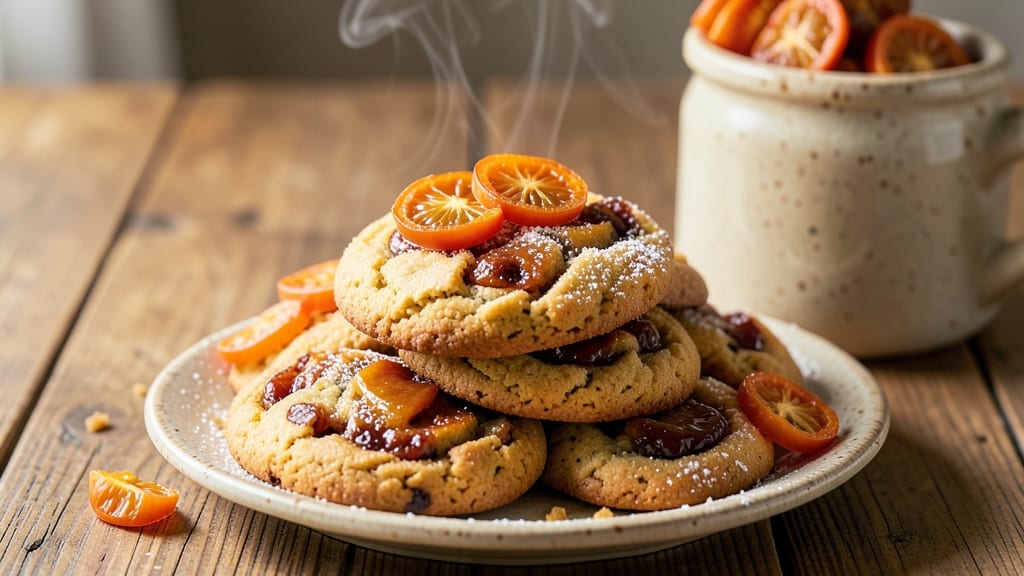
This old-fashioned persimmon cookies recipe brings back the warm, spiced flavors of Southern kitchens—where ripe persimmons transform into chewy, caramelized cookies with a perfect crunch. The secret lies in using fully ripe fruit, which breaks down into a jammy sweetness that binds the dough together while keeping the edges crisp.
I first discovered this recipe in a 1950s family cookbook, and it’s remained a holiday staple ever since.
What makes these cookies special is their balance of textures: tender centers with slightly crisp edges, all infused with warm cinnamon and nutmeg. Unlike modern recipes that rely on processed fruit spreads, this version uses whole persimmons for authentic flavor and natural sweetness.
The dough requires just 15 minutes of prep, but the flavor develops as it bakes, creating that signature caramelized aroma.
By the time they emerge from the oven, you’ll have golden-brown cookies with a soft, almost cake-like interior and a delicate crunch at the edges. The persimmon flavor shines through without being overpowering, making them a crowd-pleaser for both classic dessert lovers and those new to the fruit.
These cookies stay fresh for days, so you’ll want to bake a double batch.
Perfect for holiday gatherings, potlucks, or a cozy afternoon treat, this recipe delivers the kind of nostalgic comfort that only old-fashioned baking can provide. The technique is straightforward, but the result is undeniably special—just like the cookies my grandmother used to make.
Ingredients for old fashioned persimmon cookies
Fully ripe persimmons and classic Southern spices create chewy, caramelized cookies with perfect texture balance.
| Ingredient | Amount | Notes |
|---|---|---|
| Ripe Persimmons 🍠 | 1 ½ cups | Flesh only, fully ripe and soft |
| All-Purpose Flour 🌾 | 2 ½ cups | Sifted for light texture |
| Unsalted Butter 🧈 | 1 cup | Cold, cubed for cutting |
| Granulated Sugar 🍚 | 1 cup | Light brown preferred |
| Packed Brown Sugar 🍚 | ½ cup | Lightly packed |
| Large Eggs 🥚 | 2 whole | Room temperature |
| Pure Vanilla Extract 🌿 | 1 tbsp | High-quality Madagascar preferred |
| Ground Cinnamon 🌶️ | 2 tsp | Freshly ground for warmth |
| Ground Nutmeg 🌶️ | ½ tsp | Freshly grated preferred |
| Ground Cloves 🌶️ | ¼ tsp | Lightly toasted for depth |
| Salt 🧂 | ½ tsp | Diamond Crystal kosher |
| Baking Soda 🧪 | ½ tsp | Freshly opened |
| Vanilla Bean Seeds 🌿 | 1 tsp | Scraped from 1 bean |
The persimmons are non-negotiable—only use fruit that's completely soft when gently squeezed, like a ripe avocado. Local orchards or specialty grocers often carry them in late fall, but if you can't find them fresh, canned persimmon puree works in a pinch. For the spices, Penzeys or Spicewalla carry high-quality ground cinnamon and nutmeg—worth the investment for that authentic warmth. The vanilla bean seeds add depth that extract simply can't match, so if you're using extract, double the amount. Sift your flour and spices together first to avoid lumps in the dough.
No ripe persimmons? Substitute 1.5 cups of unsweetened applesauce for the fruit, but expect slightly less jammy texture. Running low on brown sugar? White sugar plus 1 tsp molasses mimics the moisture content. The butter should be cold but not frozen—cut it into small cubes and let it sit at room temperature for 10 minutes before mixing. For the vanilla, Madagascar extract has the most complex flavor profile, but Tahitian works too. If you can't find vanilla bean seeds, double the vanilla extract and add a pinch of sugar to balance the alcohol taste.
Store the dough in an airtight container in the fridge for up to 3 days, or freeze for 3 months in portioned balls. Baked cookies keep at room temperature in a tin for 5 days, or freeze for 6 months between layers of parchment. The caramelized edges soften slightly when reheated—pop them in a 350°F oven for 5 minutes to restore that perfect crunch. For holiday gifting, package in cellophane bags with a sprig of fresh rosemary for an old-fashioned touch.
Why You'll Love This Recipe
- No Mash Needed: I’ll be real—peeling and chopping persimmons sounds intimidating, but you don’t even need to mash them. Just scoop out the flesh with a spoon after a quick peel, and the dough comes together smoother than you’d expect. That butter-and-sugar combo melts into the fruit like magic.
- Sweet-Spiced Magic: The brown sugar caramelizes just enough to give these cookies that almost cakey texture, while the ripe persimmon adds a natural sweetness that cuts through the richness. Honestly, it’s the kind of flavor that makes you forget you’re eating a cookie—until you take the first bite and remember.
- Holiday or Snack Attack: These cookies freeze like champs, so I pull them straight from the bag for Thanksgiving desserts or when I need a quick treat. They’re sturdy enough to pack in lunches (yes, even on a Tuesday), but fancy enough to serve with coffee when company drops by.
- Pantry Staple Power: You’re probably already stocked for this—flour, butter, sugar—so it’s basically a freebie if you’ve got persimmons in season. Plus, a batch keeps for weeks in an airtight container, meaning fewer grocery runs and more time for seconds. (Between us, they disappear fast.)
Step-by-step instructions for old fashioned persimmon cookies
Master these precise techniques for cookies with caramelized edges and spiced fruit infusion.
Purée and Strain the Ripe Persimmons
Peel the persimmons and remove all seeds, then cut the flesh into small chunks. Transfer to a food processor and pulse until completely smooth, scraping down the sides as needed. For an ultra-smooth texture, strain the purée through a fine-mesh sieve to remove any remaining fibers.
This step ensures the fruit distributes evenly without altering the cookie's texture. The purée should yield exactly 1.5 cups—adjust by adding water if needed, but avoid diluting beyond this volume. Keep the purée at room temperature until ready to use, as cold purée can make the dough too stiff.
Cream Butter and Sugars for Maximum Air Incorporation
In a stand mixer fitted with the paddle attachment, beat the 1 cup unsalted butter on medium speed until completely smooth, about 1 minute. Gradually add the 1 cup granulated sugar and 0.5 cup packed brown sugar, mixing continuously for 4-5 minutes until the mixture is light, fluffy, and nearly doubles in volume.
This creaming process is critical—it incorporates air that creates the signature crackly tops. You'll know you've achieved the right texture when the mixture is pale and ribbons form when the paddle is lifted. Avoid rushing this step; under-creaming leads to dense cookies.
Combine Wet Ingredients and Infuse with Spices
Add the 2 whole large eggs, 1 tablespoon pure vanilla extract, and 1 teaspoon vanilla bean seeds to the creamed mixture, mixing on low speed for 1 minute until fully incorporated. In a separate bowl, whisk together the 2.5 cups all-purpose flour, 2 teaspoons ground cinnamon, 0.5 teaspoon ground nutmeg, 0.25 teaspoon ground cloves, 0.5 teaspoon salt, and 0.5 teaspoon baking soda.
Gradually add the dry ingredients to the wet mixture, mixing on low speed just until combined—do not overmix. Fold in the 1.5 cups persimmon purée using a silicone spatula until evenly distributed. The dough should be soft and slightly sticky but manageable. If it's too stiff, add 1-2 teaspoons water to loosen.
Chill the Dough for Optimal Texture
Divide the dough into 4 equal portions and flatten each into a ½-inch-thick disk. Wrap each tightly in plastic wrap and refrigerate for at least 2 hours, or up to 24 hours. Chilling prevents excessive spreading and allows the flour to fully hydrate, resulting in a tender crumb.
This step is non-negotiable—skipping it will yield flat, cake-like cookies instead of the desired thick, chewy texture with crisp edges. For best results, use the dough within 48 hours of chilling, as prolonged storage can alter the texture.
Bake for Caramelized Edges and Spiced Depth
Preheat the oven to 350°F and line two baking sheets with parchment paper. On a lightly floured surface, roll each dough disk into a 1-inch-thick log, then cut into 1-inch-thick rounds. Place the cookies 2 inches apart on the prepared sheets.
Bake for 12-14 minutes, rotating the sheets halfway through, until the edges are deep golden brown and the centers are set but still slightly soft to the touch. The cookies will continue firming as they cool. Remove from the oven and let rest on the sheets for 5 minutes before transferring to a wire rack to cool completely.
Pro Tips For Making Old Fashioned Persimmon Cookies
- Mash, Don’t Blend: DESCRIPTION: I learned this the hard way—pureeing persimmons turns them into glue. Use a fork to mash them right in the bowl until smooth but still slightly textured. That way, the dough stays workable and the cookies hold their shape instead of spreading into sad pancakes.
- Chill the Dough: DESCRIPTION: Skip this, and your cookies will spread like a bad rumor. Wrap the dough in plastic and refrigerate for at least 1 hour—2 hours if your kitchen’s warmer than a summer picnic. Cold butter = better structure, and you’ll thank yourself when the edges stay crisp.
- Use Cold Butter: DESCRIPTION: Yes, even if you’re impatient like me. Cut the butter into tiny cubes and toss them into the flour mixture while it’s still cold. The contrast in temperatures keeps the cookies tender, not greasy, and prevents them from turning into sugar cookies with a side of fruit.
- Test for Ripeness: DESCRIPTION: Unripe persimmons taste like chalk and ruin everything. Press near the stem—if it gives slightly (like a ripe avocado), it’s ready. Overripe? They’ll turn mushy and make your cookies taste like a sad, watery pudding. Aim for that perfect yield without the squish.
Common mistakes when making your old fashioned persimmon cookies
Unripe Persimmons
Using unripe persimmons is the most common mistake—these contain tannins that create an astringent, bitter flavor instead of the sweet, jammy texture we want. Always check for complete softness when gently squeezed, like a ripe avocado.
If your persimmons feel firm, they need 2-3 more days at room temperature to ripen. Never substitute with firm fruit or you'll end up with cookies that taste like sawdust. 🍠
Skipping the Chill
Forgetting to chill the dough for at least 2 hours leads to two major problems: excessive spreading and dense texture. The flour needs time to fully hydrate and the butter to firm up slightly.
I've seen home bakers rush this step and end up with flat, cake-like cookies instead of the thick, chewy texture we're after. Trust me, the 24-hour chill in the fridge is worth every minute for that perfect crumb.
Overmixing the Dough
Once you add the flour mixture, stop mixing the moment everything comes together—overmixing develops gluten and makes the cookies tough. I recommend using a silicone spatula to gently fold in the persimmon purée by hand rather than relying on the mixer.
The dough should be soft and slightly sticky, not stiff or elastic. If it feels tough, add 1 teaspoon water at a time until it reaches the right consistency.
Incorrect Baking Temperature
Baking at 375°F instead of 350°F causes the cookies to brown too quickly on the outside while remaining undercooked inside. The lower temperature allows for even cooking and those beautiful caramelized edges.
Use an oven thermometer to verify your oven's accuracy—many home ovens run 25°F hotter than set. Rotate the baking sheets halfway through for even heat distribution.
Underestimating the Persimmon Quantity
Some recipes call for less persimmon purée, but that leads to dry, crumbly cookies. The 1.5 cups in this recipe is essential for that signature jammy texture. If your purée measures less after straining, don't substitute with extra sugar—it won't replicate the fruit's moisture content.
Instead, add 1-2 teaspoons water to maintain the proper consistency without altering the flavor profile.
Overcrowding the Pan
Placing cookies too close together traps steam and prevents proper browning. The 2-inch spacing between cookies allows hot air to circulate, creating those perfect caramelized edges. I've seen home bakers fit 30 cookies on a single sheet instead of the recommended 12-15, resulting in pale, underbaked cookies.
Use two baking sheets if needed—your cookies will thank you with that beautiful golden-brown color. 🔥
Nutrition facts
Frequently asked questions
Why do these cookies need fully ripe persimmons?
Unripe persimmons contain bitter tannins that ruin the sweet, jammy flavor. Fully ripe fruit (soft like avocado) breaks down into natural sugars during baking, creating that signature caramelized texture. The flesh should yield easily when pressed—never use firm fruit or you'll get cookies with an unpleasant astringent taste.
Can I make these cookies without persimmons?
Yes, but the texture will differ. Substitute 1.5 cups unsweetened applesauce for the fruit, but expect less jammy flavor. For a closer match, blend 1 cup cooked dried apricots with ½ cup water until smooth. The cookies will still be delicious, just with a different fruit profile.
How do I store persimmon cookies to keep them fresh?
Store baked cookies in an airtight container at room temperature for 5 days, or freeze between parchment layers for 6 months. For extra freshness, place a slice of bread in the container to absorb moisture. Reheat at 350°F for 5 minutes to restore that perfect caramelized crunch.
What's the secret to getting those beautiful caramelized edges?
The 350°F temperature and 2-inch spacing between cookies are key. Bake until edges are deep golden brown (not dark brown) and centers are just set. Rotate pans halfway through for even heat. Skipping the chill step or overcrowding the pan will prevent proper browning.
Can I make these cookies gluten-free?
Yes, but with adjustments. Replace the all-purpose flour with a 1:1 gluten-free baking flour blend (like Bob's Red Mill) plus ½ teaspoon xanthan gum. Add 1 extra tablespoon water to the dough. Expect slightly denser texture—these cookies rely on gluten for their classic chew.