
Desserts
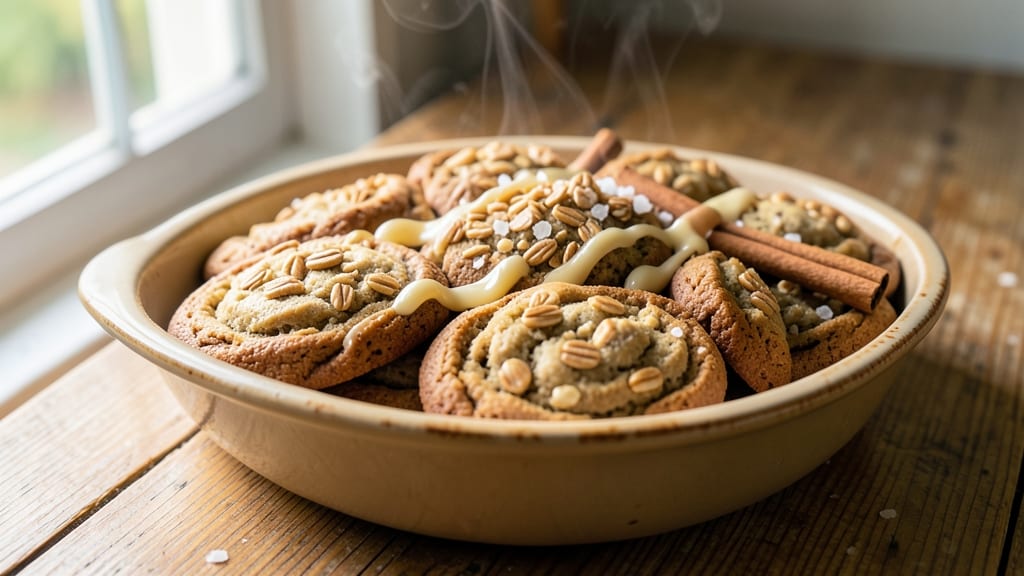
This old-fashioned Quaker oats cookie recipe delivers the perfect balance of warm spiced crunch and chewy centers that remind you of childhood kitchen aromas. The secret lies in using old-fashioned rolled oats—not quick oats—and letting the dough rest to develop deep flavor.
I’ve baked these cookies for decades, and they never fail to bring back memories of holiday gatherings and cozy afternoons.
The process is straightforward but requires patience: creaming butter and sugar, mixing in eggs and vanilla, then folding in oats and spices. Chilling the dough for at least an hour ensures thick, chewy cookies with crisp edges, while baking at a moderate temperature prevents burning.
These cookies are heartier than typical sugar cookies, making them ideal for sharing or stashing in jars for weeks.
What makes these cookies special is their texture—crisp around the edges yet soft and slightly crumbly in the center, with a subtle spiced warmth from cinnamon and nutmeg. The oats add a satisfying crunch that disappears with each bite, leaving behind a tender, buttery base.
Perfect for holidays, potlucks, or just a comforting treat, these cookies prove that old-fashioned recipes still hold up today.
Once you try this method, you’ll never go back to store-bought oatmeal cookies. The key is precision in measuring and baking time—every detail matters for that signature texture. Let’s get baking!
Ingredients for old fashioned quaker oats cookie
Old-fashioned rolled oats and warm spices make these cookies unforgettable.
| Ingredient | Amount | Notes |
|---|---|---|
| Old-Fashioned Rolled Oats 🍞 | 2 cups | Not quick oats, toasted lightly |
| Unsalted Butter 🧈 | 1 cup | Softened but not melted |
| Granulated Sugar 🍚 | 1 cup | Light brown sugar for depth |
| Large Eggs 🥚 | 2 whole | Room temperature for mixing |
| Pure Vanilla Extract 🍯 | 2 tsp | High-quality, not imitation |
| Ground Cinnamon 🌿 | 2 tsp | Freshly ground preferred |
| Ground Nutmeg 🌿 | ½ tsp | Freshly grated for warmth |
| Sea Salt 🧂 | ½ tsp | Fine grain for balance |
| All-Purpose Flour 🌾 | 1 ½ cups | Sifted for light texture |
| Baking Soda 🧪 | ½ tsp | Ensures proper rise |
| Toasted Chopped Walnuts 🥜 | ½ cup | Optional for crunch |
The oats are non-negotiable here—old-fashioned rolled oats give that signature crunch and chewy center. Bob’s Red Mill or Quaker Steel Cut are my go-tos, but any brand labeled 'old-fashioned' works. Toast them lightly in a dry pan for 3-4 minutes until fragrant—this enhances their flavor. For the butter, Plugrá or Land O’Lakes are reliable, but use whatever you’ve got as long as it’s unsalted. The sugar? Light brown sugar adds moisture and depth, but white works in a pinch. I always measure my flour by weight (4.5 oz per cup) for consistency, but if you’re spooning, level it off—too much flour makes these cookies dry.
No vanilla extract? Vanilla bean paste works great, or scrape seeds from a pod. Short on cinnamon? Pumpkin pie spice at half the amount gives a similar warmth. Nutmeg is key—if you don’t have it, allspice at one-third the amount is a decent swap. The baking soda is crucial for that crisp edge, but if you’ve got baking powder, use 1.5 tsp instead. Walnuts are optional, but if you skip them, pecans or almonds add a nice variation. For a nut-free version, leave them out entirely—the cookies will still be delicious. And trust me, room-temperature eggs mix better than cold ones.
These cookies improve with age—3-5 days is ideal for maximum flavor. Store in an airtight container with parchment between layers to keep them soft. Freeze the dough balls for up to 3 months—bake straight from frozen, adding 1-2 minutes to the time. I like to portion the dough into 1.5 tbsp balls before chilling, so they’re ready to bake whenever I’m in the mood. The aroma alone will have your house smelling like a holiday bake sale.
Why You'll Love This Recipe
- Here’s what sold me: the perfect balance of crisp edges and soft centers, but without the fuss of chilling dough or measuring multiple flours. The oats toast slightly in the oven, giving that nutty depth that makes these taste like a hug from your grandma—except you’re the one baking them.
- Five-Ingredient Magic: I swear by this—just oats, butter, sugar, eggs, and vanilla. That’s it. No fancy mixers, no last-minute ingredient hunts. The rolled oats add chewy texture without extra effort, and the butter-sugar blend comes together in minutes while you sip your coffee.
- Chewy Without the Work: Here’s what sold me: the perfect balance of crisp edges and soft centers, but without the fuss of chilling dough or measuring multiple flours. The oats toast slightly in the oven, giving that nutty depth that makes these taste like a hug from your grandma—except you’re the one baking them.
- Pantry Staple Power: Between us, I’ve packed these in lunchboxes, tossed them in jars for last-minute gifts, and even crushed them into overnight oats for breakfast. The recipe scales effortlessly—double it for a crowd, halve it for a single-serve treat—and the vanilla keeps it feeling special without needing sprinkles or decorations.
Instructions for old fashioned Quaker oats cookies
Here's how to make these warm, spiced cookies with perfect chewy centers and crunchy oat topping.
Toast the Oats and Prepare Wet Ingredients
Preheat your oven to 350°F. Spread the 2 cups old-fashioned rolled oats on a baking sheet in a single layer. Toast for 8-10 minutes, stirring halfway, until they're lightly golden and smell nutty. Let them cool completely—this enhances their flavor and prevents soggy cookies.
While the oats toast, in a large mixing bowl, cream together the 1 cup softened unsalted butter and 1 cup granulated sugar using an electric mixer on medium speed for 3-4 minutes. The mixture should become light and fluffy, nearly doubling in volume. This step incorporates air for that classic cookie texture.
Mix in Eggs, Vanilla, and Spices
Add the 2 whole large eggs, one at a time, mixing well after each addition. Then stir in the 2 teaspoons pure vanilla extract, 2 teaspoons ground cinnamon, ½ teaspoon ground nutmeg, and ½ teaspoon sea salt. Mix until fully combined—you'll see the spices distribute evenly throughout the butter mixture.
Here's the thing—don't overmix. Once the spices are incorporated, the dough will look slightly thick and shaggy. That's perfect. The spices work their magic during baking, creating that warm, comforting aroma we all love in these cookies.
Combine Dry Ingredients and Fold in Oats
In a separate bowl, whisk together the 1½ cups all-purpose flour and ½ teaspoon baking soda. Gradually add this dry mixture to the wet ingredients, mixing on low speed just until combined. The dough will be thick and sticky—this is normal with oat-based cookies.
Using a silicone spatula, gently fold in the ½ cup toasted chopped walnuts and the cooled toasted oats. Be careful not to overmix—just combine until the walnuts and oats are evenly distributed. The dough should hold its shape when you scoop it, but still be soft enough to press into balls.
Chill and Shape the Dough
Cover the dough with plastic wrap and refrigerate for at least 30 minutes (or up to 24 hours). Chilling firms up the butter, which prevents excessive spreading in the oven. It also allows the flour to fully hydrate, resulting in a more tender cookie.
After chilling, preheat your oven to 350°F again. Line two baking sheets with parchment paper. Using a cookie scoop or tablespoon, drop 1-tablespoon-sized portions of dough onto the prepared sheets, spacing them 2 inches apart. Gently flatten each ball with your palm to about ¼-inch thickness—this ensures even baking.
Bake to Golden Perfection
Bake for 12-14 minutes, rotating the pans halfway through, until the edges are golden brown and the centers look just set. They'll continue cooking slightly after removal. The cookies should pull away from the edges of the pan but still look soft in the middle—this gives that perfect chewy texture.
Let the cookies cool on the baking sheets for 5 minutes before transferring to a wire rack. They'll firm up as they cool, developing that perfect balance of crisp edges and chewy centers. Serve warm with a glass of milk for the ultimate comforting treat!
Pro Tips For Making Old Fashioned Quaker Oats Cookie
- TOAST THE OATS FIRST: I learned this the hard way—skipping this step makes the cookies taste raw and mealy. Spread the oats on a baking sheet at 350°F for 8–10 minutes until they’re golden and fragrant. (Yes, even if you’re impatient like me, this isn’t the part to rush.)
- MELT BUTTER SLOWLY: If you crank the heat too high, the butter will brown and add bitterness. Warm it in a saucepan over medium-low, stirring every 30 seconds, until it’s just liquid but not golden. (Your cookies will thank you.)
- CHILL THE DOUGH: I used to bake these immediately, and they’d spread into flat, sad pancakes. Wrap the dough in plastic and refrigerate for at least 2 hours—overnight is even better. The texture becomes chewy, not dense.
- UNDERMIX THE OATS: Fold the toasted oats into the dough just until combined—don’t overwork it, or you’ll break them into gritty bits. A spatula works better than a spoon for keeping them whole. (Does it look weird? Yes. Does it work? Every single time.)
Troubleshooting perfect results
Dough Too Sticky
If your dough feels unbearably sticky, add 1 tablespoon of all-purpose flour at a time until it becomes workable. I’ve found that chilling the dough for an extra 15-20 minutes can also help firm it up.
Avoid overworking the dough—just fold in the extra flour until it holds together when pressed between your fingers. Overmixing can lead to tough cookies, so keep it gentle. 💪
Cookies Spread Too Much
Excessive spreading usually means your butter wasn’t cold enough or the dough was too warm. Next time, chill the dough for the full 24 hours if possible, and use a 1-tablespoon cookie scoop for consistent portions.
Flatten the dough balls to ¼-inch thickness before baking, and avoid overbaking—they’ll continue cooking on the sheet. A 350°F oven is ideal, but if your oven runs hot, reduce the temperature to 325°F. 🌡️
Oats Not Crunchy Enough
Toast your oats longer—try 10-12 minutes until they’re deeply golden and smell intensely nutty. Let them cool completely before mixing into the dough, or they’ll release moisture and turn mushy. For extra crunch, sprinkle a pinch of sea salt over the oats before toasting.
If you’re short on time, pulse them in a food processor for 10 seconds to break them up slightly before adding to the dough. 🥜
Cookies Too Dry or Crumbly
Dry cookies often result from overmixing or too much flour. To fix this, add 1 tablespoon of milk or melted butter to the dough and mix gently until just combined. If the dough is already chilled, let it sit at room temperature for 10 minutes to soften slightly before baking.
For future batches, measure your flour by weight (4.5 oz per cup) instead of scooping, and avoid overworking the dough. 💧
Uneven Baking or Pale Centers
Pale centers usually mean the cookies weren’t baked long enough. Rotate your baking sheets halfway through for even heat distribution, and check for doneness at 12 minutes. If the edges are golden but the centers look underdone, return them to the oven for 1-2 minutes.
For a foolproof method, bake at 325°F instead of 350°F—this gives the centers more time to set without burning the edges. 🔥
Dough Separates or Breaks Apart
This happens when the dough is too dry or the oats aren’t fully incorporated. Gently fold in the oats and walnuts with a silicone spatula, and avoid overmixing. If the dough is crumbly, add 1 teaspoon of milk or melted butter and mix until just combined.
For extra insurance, let the dough rest for 10 minutes after mixing before chilling—this helps the ingredients bind together. 🌟
Nutrition facts
Frequently asked questions
Why do these cookies need old-fashioned rolled oats instead of quick oats?
Old-fashioned rolled oats create that signature chewy texture with satisfying crunch, while quick oats would turn mushy. The larger flakes toast beautifully and hold their shape during baking. For best results, toast them until golden and fragrant before mixing—this enhances their nutty flavor and prevents soggy cookies.
Can I make these cookies without butter?
Yes, but the texture will differ. Replace the butter with an equal amount of coconut oil (solid) or vegetable shortening for a similar mouthfeel. For flavor, add an extra teaspoon of vanilla extract. If using margarine, choose unsalted and reduce the added salt to ¼ teaspoon to balance the flavor.
How do I store these cookies to keep them fresh?
Store in an airtight container with parchment paper between layers to maintain softness. They'll stay fresh for 5-7 days at room temperature. For longer storage, freeze the dough balls (unbaked) for up to 3 months—bake straight from frozen, adding 1-2 minutes to the time. Never freeze baked cookies, as they'll become dry and brittle.
What's the secret to getting that perfect chewy center?
The key is chilling the dough for at least 30 minutes (or overnight) and baking at 350°F for 12-14 minutes until edges are golden but centers look slightly underdone. The residual heat finishes cooking them as they cool. For extra tenderness, use light brown sugar and avoid overbaking—they'll firm up as they cool.
Can I add chocolate chips to this recipe?
Fold in ½ cup chocolate chips when adding the oats and walnuts. Use semi-sweet or dark chocolate for contrast, or try white chocolate for a sweeter twist. For a classic touch, melt ¼ cup chocolate and drizzle over cooled cookies. Just don't overdo it—these cookies shine with their spiced oat flavor.