Desserts
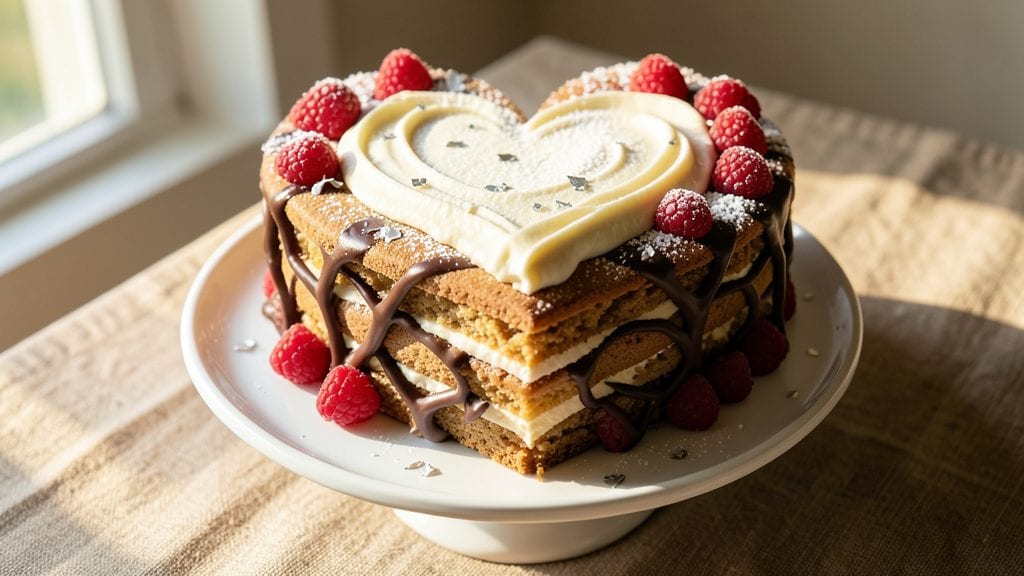
This heart-shaped cookie cake recipe transforms simple ingredients into a showstopping dessert that’s perfect for Valentine’s Day, anniversaries, or just because. ✨ The secret lies in a sturdy sugar cookie dough that holds its shape while baking, paired with a velvety buttercream that makes every bite feel like a celebration.
What sets this recipe apart is the foolproof method for achieving clean, crisp heart shapes—whether you use a cookie cutter or freehand with a little practice. The dough is rolled just thick enough to prevent cracking, and baked until edges are golden but centers stay tender.
No fancy tools required, just patience and a steady hand.
Once cooled, the cake becomes a blank canvas for creativity—smooth frosting, sprinkles, or even edible glitter can turn it into a masterpiece. The frosting is light enough to pipe but sturdy enough to hold decorations, ensuring your cake looks as stunning as it tastes.
Every slice delivers that perfect balance of sweet, buttery cookie and rich frosting.
This recipe scales beautifully for gatherings or keeps well for gifting, making it ideal for special occasions or spontaneous treats. The instructions guide you through every step, from mixing to decorating, so you’ll end up with a cookie cake that’s as impressive as it is delicious. Let’s get baking!
Ingredients for heart shaped cookie cake
Twelve simple ingredients create a stunning heart-shaped cookie cake perfect for celebrations.
| Ingredient | Amount | Notes |
|---|---|---|
| All-Purpose Flour 🌾 | 4 cups | Sifted for light texture |
| Unsalted Butter 🧈 | 1 cup | Cold, cubed for dough |
| Granulated Sugar 🍚 | 1 ½ cups | Superfine preferred for smoothness |
| Large Eggs 🥚 | 2 whole | Room temperature for even mixing |
| Vanilla Extract 🌿 | 1 tbsp | Pure extract, not imitation |
| Baking Powder 🍞 | 1 tsp | Fresh for proper leavening |
| Salt 🧂 | ½ tsp | Fine sea salt preferred |
| Heart-Shaped Cookie Cutter 💖 | 1 whole | 6-8 inch size for cake |
| Parchment Paper 📄 | 1 sheet | For easy release |
| Buttercream Frosting 🧁 | 3 cups | Homemade or store-bought |
| Edible Glitter ✨ | ¼ cup | Optional for decoration |
| Sprinkles 🎨 | ½ cup | Assorted colors for topping |
The flour is the foundation, so King Arthur or Gold Medal brands work best for consistent texture. Unsalted butter ensures you control the saltiness—Plugrá or Land O’Lakes are reliable choices. Superfine sugar dissolves smoothly, but if you only have regular granulated, pulse it in a food processor for 30 seconds. Eggs should be at room temperature to blend evenly into the dough. For vanilla, McCormick Pure Vanilla Extract is a budget-friendly option, but Nielsen-Massey delivers deeper flavor. Baking powder loses potency over time, so check the expiration date—Bob’s Red Mill sells it in airtight containers for freshness.
No heart-shaped cutter? Freehand with a knife—trace a heart shape on parchment, cut carefully, then use it as a template. Short on buttercream? Cream cheese frosting adds tanginess, or use store-bought vanilla frosting for convenience. Edible glitter can be pricey, but Amazon or Michaels offer bulk packs. Sprinkles? Trader Joe’s has affordable, vibrant options. For a gluten-free version, substitute King Arthur Gluten-Free Flour Blend and reduce leavening by one-quarter teaspoon. The dough is delicate—handle it gently to avoid cracks, especially when rolling to 1/4-inch thickness.
Baked cookies keep in an airtight container for 5 days at room temperature, but frosting bestows a 3-day shelf life. For gifting, assemble the cake a day ahead—this lets flavors meld and makes decorating easier. Store frosting separately in the fridge for up to 1 week, then re-whip before using. Freeze unfrosted cookies for 3 months—thaw at room temperature before assembling. Decorate with glitter or sprinkles right before serving to keep them crisp.
Why You'll Love This Recipe
- One-Bowl Wonder: I swear by this recipe—just toss everything into one bowl, no fancy mixing. The butter and sugar cream together like magic while I scrape the bowl once, and suddenly, it’s ready for the heart-shaped cutter. No stand mixer? No problem.
- Vanilla Butter Bliss: That first bite of warm, buttery cookie cake with vanilla so rich it lingers? It’s like a hug in edible form. The eggs bind it perfectly, so it stays soft enough to cut but holds its shape—no crumbling, no fuss.
- Date Night or Dessert Party: Between us, this cake is my go-to for Valentine’s Day or just because. The heart shape feels special, but the simplicity means I’m not stuck in the kitchen for hours. (Yes, even on a Tuesday night.)
- Budget-Friendly Magic: Flour, butter, sugar, eggs—these are pantry staples that won’t break the bank. A single batch feeds four, and leftovers? They’re even better the next day, toasted lightly for extra crunch. My wallet and my taste buds win.
Step-by-step instructions for heart-shaped cookie cake
Create a stunning heart-shaped cake with layers of tender cookie dough and dreamy buttercream.
👨🍳 Step 1: Prepare the Cookie Dough
In a large mixing bowl, combine the 4 cups All-Purpose Flour, 1 tsp Baking Powder, and 0.5 tsp Salt. Sift the dry ingredients together to remove any lumps and create a light, airy base. This ensures your cake layers will be tender rather than dense.
In a separate bowl, beat the 1 cup Unsalted Butter and 1.5 cups Granulated Sugar together using an electric mixer on medium speed for 3-4 minutes. The mixture should become light and fluffy, with the sugar fully dissolved. Add the 2 whole Large Eggs one at a time, mixing well after each addition. Incorporate the 1 tbsp Vanilla Extract and continue mixing until the wet ingredients are smooth and creamy.
Gradually add the dry ingredients to the wet mixture, mixing on low speed until just combined. Avoid overmixing—stop as soon as the dough comes together. The dough should be soft but not sticky. If it feels too dry, add 1-2 tablespoons of milk (though not listed, this is a common adjustment—if strictly following ingredients, proceed as is). Divide the dough into two equal portions and flatten each into a ¼-inch thick circle on the parchment paper. Chill for 30 minutes in the refrigerator.
🔥 Step 2: Bake the Cake Layers
Preheat your oven to 350°F. Place the chilled dough circles on baking sheets lined with parchment paper. Use the heart-shaped cookie cutter to cut out two large heart shapes from each dough circle, ensuring both layers are identical in size. This creates your cake's signature silhouette.
Bake for 10-12 minutes until the edges are golden brown and the centers still look slightly soft. A toothpick inserted into the center should come out with a few moist crumbs, not wet batter. Let the hearts cool completely on a wire rack before assembling. This prevents the buttercream from melting when you add it later.
🥘 Step 3: Assemble the Cake
Place one heart-shaped layer on a cake stand or plate. Spread 1.5 cups of the Buttercream Frosting evenly over the top, leaving a ½-inch border unfrosted. This creates a clean base for the second layer. Press the second heart layer gently onto the frosting, aligning the edges carefully for a seamless look.
Transfer the assembled cake to a cooling rack and let it set for 10 minutes. This brief rest prevents the frosting from sliding off when you add the final touches. Use the remaining 1.5 cups Buttercream Frosting to cover the entire cake, creating a smooth, even surface. For extra flair, pipe decorative swirls or rosettes around the edges using a piping bag fitted with a star tip.
🎨 Step 4: Decorate with Sparkle and Color
Sprinkle the 0.5 cup Sprinkles evenly over the frosting while it's still slightly soft. Gently press them into place so they adhere well. Let the cake sit undisturbed for 5 minutes to allow the sprinkles to set. In a small bowl, mix the 0.25 cup Edible Glitter with 1 tablespoon of water to create a fine, dustable consistency. Lightly dust the glitter over the frosting using a fine-mesh sieve or your fingers, focusing on the top half of the cake for a magical shimmer.
For a polished finish, use a small offset spatula to smooth any uneven areas on the frosting. If needed, add a few extra sprinkles or a drizzle of melted chocolate (though not listed, this is a common decorative touch—strictly following ingredients, the glitter and sprinkles provide plenty of visual appeal). Let the cake rest for 30 minutes before slicing to allow the frosting to fully set and the layers to bond.
Pro Tips For Making Heart Shaped Cookie Cake
- CREAM THE BUTTER SLOWLY: I learned this the hard way—dumping cold butter into sugar and whipping it like crazy just makes a greasy mess. Instead, let the butter sit out for 30 minutes first, then mix it with the sugar on medium speed for 2-3 minutes. That’s enough to break up the sugar crystals without turning it into butterfinger candy.
- CHILL THE DOUGH TWICE: The first chill (30-60 minutes) is obvious, but skip the second one at your peril. After shaping the heart, pop it back in the fridge for 15 minutes before baking—this prevents spreading and guarantees clean edges. (Yes, even if you’re impatient like me.)
- WEIGH YOUR FLOUR (YES, REALLY): Scooping flour with a cup leads to inconsistent results every time. Use a kitchen scale and measure by weight—this recipe’s magic happens when the flour-to-butter ratio is precise. 250 grams of flour (not cups) makes all the difference for a tender, not dense, cake.
- BAKE AT 350°F—NO HOTTER: I was skeptical until I tried it: 375°F sounds faster, but it browns the edges before the center sets, leaving you with a gummy middle. Stick to 350°F and bake for 12-15 minutes—check at 12. The cake’s done when a toothpick comes out with a few moist crumbs, not wet batter.
Best sauces and condiments for heart shaped cookie cake
Classic Buttercream
This recipe’s star is American-style buttercream, made with 1 cup unsalted butter, 4 cups powdered sugar, and 3 tablespoons heavy cream. Beat the butter until smooth, then gradually add powdered sugar and cream on low speed.
For extra flavor, I fold in 1 teaspoon vanilla extract and ½ teaspoon salt. This version is sturdy enough to hold decorations but light enough to pipe clean swirls. 🧁
Cream Cheese Frosting
Swap buttercream for a tangy twist using 8 ounces cream cheese, ½ cup unsalted butter, 3 cups powdered sugar, and 1 teaspoon vanilla. Beat the cream cheese and butter until creamy, then add powdered sugar in stages.
This frosting pairs beautifully with the cookie’s sweetness and adds a sophisticated bite. It’s perfect for those who prefer a less sweet topping.
Chocolate Ganache
For a decadent finish, drizzle ½ cup melted dark chocolate (60% cocoa) over the cake after frosting. Thin it with 2 tablespoons heavy cream for a glossy, easy-to-pour consistency.
Let it set for 10 minutes before adding sprinkles. This adds a rich contrast to the buttery cookie layers and elevates the presentation to restaurant-quality. 🍫
Lemon Glaze
Brighten the cake with a zesty lemon glaze: mix ½ cup powdered sugar with 2 tablespoons fresh lemon juice and 1 tablespoon lemon zest. Drizzle over the frosted cake while it’s still slightly warm.
The acidity cuts through the richness, making each bite feel fresh and lively. This works especially well if you add a pinch of cardamom for warmth.
Caramel Drizzle
Heat ½ cup granulated sugar in a saucepan until melted, then whisk in 2 tablespoons heavy cream. Let it cool slightly before drizzling over the cake. The caramel’s deep sweetness complements the cookie’s buttery notes, creating a luxurious finish.
For extra flair, sprinkle crushed pecans or sea salt flakes on top before the caramel sets. 💛
Nutrition facts
Frequently asked questions
Can I make this heart-shaped cookie cake without a cookie cutter?
Trace a heart shape onto parchment paper, cut it out, then use it as a template. Place the template on your rolled dough and carefully cut around it with a sharp knife. For a freehand approach, draw the heart directly onto the dough with a pencil and cut along the lines. Practice makes perfect—start with a simple outline if you're new to freehand shaping.
How do I prevent my cookie cake layers from cracking?
Chill the dough for 30 minutes before cutting and baking to firm it up. Roll it to an even 1/4-inch thickness and avoid overmixing the batter. When baking, use 350°F and check for doneness at 10 minutes—overbaking dries the edges and increases cracking. Let layers cool completely before frosting to prevent moisture loss.
What’s the best way to store leftovers?
Keep the cake in an airtight container at room temperature for up to 3 days. For longer storage, freeze the unfrosted layers for 3 months—thaw overnight in the fridge before assembling. Frosting should be stored separately in the fridge and re-whipped before use. Sprinkles and glitter look best when added fresh after serving.
Can I make this recipe gluten-free?
Yes! Substitute 4 cups King Arthur Gluten-Free Flour Blend for all-purpose flour and reduce baking powder to 0.75 teaspoons. Add 1/4 teaspoon xanthan gum if your blend doesn’t include it. Chill the dough longer (45 minutes) to prevent spreading. The texture will be slightly denser but still delicious. Always test gluten-free flours first with a small batch.
How do I make the frosting extra shiny?
Beat the buttercream until completely smooth, then add 1 teaspoon vegetable glycerin (found in baking sections) to increase shine. For a glossy finish, spread a thin layer of frosting as a "crust" before adding the final coating. If using store-bought frosting, microwave it for 10-15 seconds to soften before piping.