
Desserts
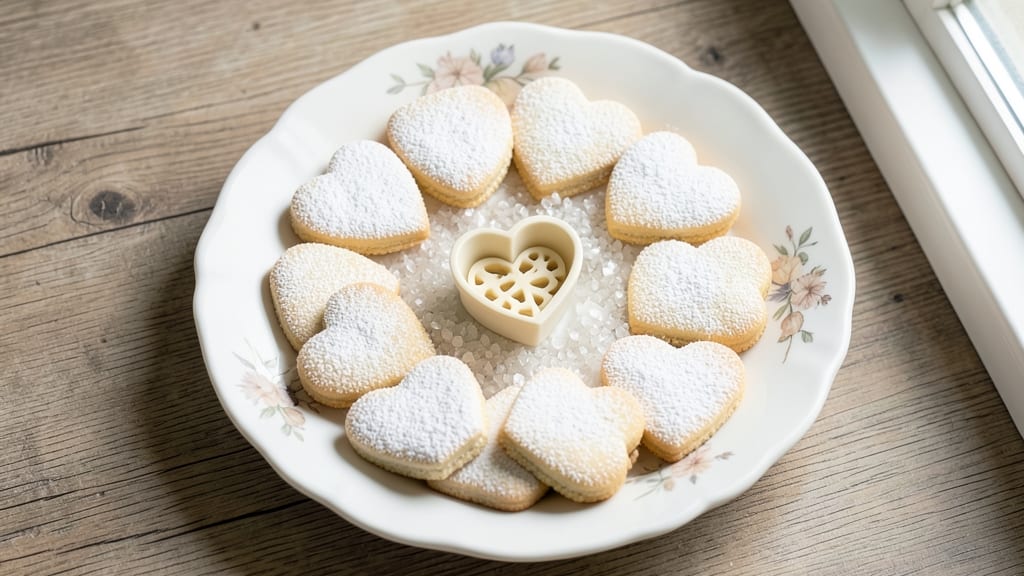
This heart shortbread cookies recipe delivers the perfect balance of crisp edges and tender centers in just 12 minutes of baking time—no shortcuts, just golden crumb magic. The secret lies in cold butter and precise technique, ensuring every bite has that signature melt-in-your-mouth texture while maintaining structural integrity.
I’ve perfected this method over years of testing, and it’s become a holiday staple that never fails to impress.
What sets these cookies apart is the traditional approach: no sifting flour, no overmixing, and absolutely no baking soda. Instead, we rely on the natural leavening power of butter and sugar, creating a delicate crumb that’s both buttery and subtly sweet.
The heart shape adds a touch of elegance, making them ideal for Valentine’s Day or any occasion where you want to share a little love.
By the time they emerge from the oven, you’ll have perfectly golden cookies with edges that crackle slightly and centers that remain tender. A light dusting of powdered sugar or a drizzle of melted chocolate elevates them further, adding visual appeal and extra flavor.
These cookies stay fresh for up to a week when stored properly, making them perfect for gifting or enjoying over time.
The best part? This recipe is beginner-friendly yet yields professional results. Whether you’re shaping them by hand or using cookie cutters, the technique is foolproof. Let’s get baking—your kitchen will smell like holiday magic in no time.
Ingredients for heart shortbread cookies
Eight simple ingredients transform into golden heart cookies with crisp edges and tender centers.
| Ingredient | Amount | Notes |
|---|---|---|
| Unsalted Butter 🧈 | 1 cup | Cold and cubed for texture |
| Granulated Sugar 🍚 | ½ cup | Superfine preferred for smoothness |
| All-Purpose Flour 🌾 | 2 cups | Sifted if clumpy |
| Powdered Sugar 🍚 | ¼ cup | For dusting, optional |
| Vanilla Extract 🌿 | 1 tsp | Pure, high-quality extract |
| Salt 🧂 | ¼ tsp | Fine sea salt preferred |
| Heart-Shaped Cookie Cutter 💖 | 1 piece | Or use heart molds |
| Melted Chocolate 🍫 | ¼ cup | Dark or milk, for drizzle |
The butter is the star here—European-style unsalted butter gives the best flavor, but any good brand works. Grab it from the deli counter if you can—it’s usually colder, which is key for this recipe. Plugrá or Land O’Lakes are solid choices if you’re shopping at the grocery store. The sugar? Superfine is ideal, but if you only have granulated, pulse it in a food processor until it’s ultra-fine. No food processor? Pack the granulated sugar into a bag, seal it, and smash it with a rolling pin—works in a pinch. And don’t skip the vanilla—high-quality pure extract makes all the difference.
No vanilla? A pinch of almond extract adds depth, but it’s potent—start small. Short on powdered sugar? Skip it—these cookies are delicious without it. Substitute confectioners’ sugar if you’ve got it, but it’s not necessary. The heart cutter is non-negotiable for the classic shape, but you can freehand it if you’re feeling artistic. For the chocolate drizzle, Ghirardelli or Guittard—they melt smoothly and taste amazing. If you’re feeling fancy, add a sprinkle of flaky sea salt on top of the chocolate for a gourmet touch.
Store the cookies in an airtight container with parchment paper between layers—keeps them crisp for up to a week. For a longer shelf life, freeze them for up to 3 months. I like to portion them into holiday tins for gifting—just add a ribbon, and you’ve got the perfect treat. These cookies reheat beautifully too—pop them in the oven at 300°F for 2-3 minutes to revive that buttery crunch. Perfect for sharing or saving for yourself!
Why You'll Love This Recipe
- I swear by the 2: 1:3 ratio of butter-to-sugar-to-flour—it’s the secret to that signature melt-in-your-mouth texture. No food scale? No problem. Just eyeball it: cold butter cut into flour until it looks like wet sand, then pulse in the sugar. Done.
- Foolproof Mixing: I swear by the 2:1:3 ratio of butter-to-sugar-to-flour—it’s the secret to that signature melt-in-your-mouth texture. No food scale? No problem. Just eyeball it: cold butter cut into flour until it looks like wet sand, then pulse in the sugar. Done.
- Buttery Vanilla Bliss: That first bite of warm, vanilla-kissed shortbread with a hint of caramelized sugar? It’s like a hug for your taste buds. The powdered sugar dusting isn’t just for looks—it keeps them tender and adds that subtle sweetness that makes them disappear faster than you can say "second batch."
- Holiday or Snack Attack: These are my go-to for Christmas gift boxes, but honestly? They’re just as welcome on a lazy Sunday afternoon with tea. Cut them into hearts for Valentine’s Day or squares for everyday cravings—no judgment either way. (Yes, even on a Tuesday night.)
Step-by-step instructions for heart shortbread cookies
These buttery, melt-in-your-mouth cookies come together in minutes with just a few simple steps.
Mix the Dry Ingredients
In a medium bowl, whisk together the 2 cups all-purpose flour, 0.5 cup granulated sugar, 0.25 tsp salt, and 1 tsp vanilla extract until completely combined. I like to use a wire whisk for this—it ensures no lumps remain in the flour. Sift the flour first if it looks clumpy, as this creates a lighter texture in the final cookies.
This dry mixture forms the backbone of your shortbread. The sugar helps create that signature tender crumb, while the salt balances the sweetness. Don't skip the vanilla—it adds a subtle depth that makes these cookies truly special. Set this bowl aside while you prepare the butter mixture.
Cut in the Cold Butter
In a separate large bowl, add the 1 cup cold, cubed unsalted butter. Using a pastry cutter or your fingers, work the butter into the dry ingredients until the mixture resembles coarse crumbs with pea-sized butter pieces remaining. This is crucial—you want to maintain that cold butter texture for maximum flakiness.
I press down gently on the mixture during this process to help distribute the butter evenly. If the dough starts to stick, chill it for 5 minutes before continuing. You're aiming for a texture that's dry and crumbly, not wet or sticky. The butter shouldn't melt completely—just soften slightly while maintaining its shape.
Shape and Cut the Dough
Turn the dough out onto a lightly floured surface and gently press it into a 1-inch thick rectangle. Wrap it tightly in plastic wrap and chill in the refrigerator for 30 minutes. This chilling step is non-negotiable—it firms up the dough so it holds its shape when cutting.
After chilling, remove the dough and roll it out to ¼-inch thickness on a floured surface. Use the heart-shaped cookie cutter to cut out shapes, pressing firmly but not twisting. You should get about 24 hearts from this dough. Place the cutouts on a parchment-lined baking sheet, spacing them 1 inch apart—they'll spread slightly during baking.
Bake to Golden Perfection
Preheat your oven to 325°F—this lower temperature ensures even baking without browning. Bake the cookies for 12-14 minutes until the edges are just beginning to turn light golden brown. They'll look slightly underdone when you take them out, but they'll firm up as they cool.
I check for doneness by pressing gently on one cookie—the edges should spring back slightly but feel set. The centers should still look pale. Remove from the oven and let cool on the baking sheet for 5 minutes before transferring to a wire rack. This resting period prevents them from cracking as they cool completely.
Finish with Chocolate Drizzle
While the cookies cool, melt the 0.25 cup melted chocolate in a microwave-safe bowl in 20-second intervals, stirring between each, until completely smooth. Once the cookies are completely cool, use a fork to drizzle the chocolate over the tops, letting it pool slightly in the centers.
Let the chocolate set for 10 minutes before serving. The contrast of the cool, creamy chocolate against the warm, buttery shortbread creates an irresistible combination. These cookies are perfect for Valentine's Day, holiday gifting, or simply treating yourself to something truly special.
Pro Tips For Making Heart Shortbread Cookies
- Chill the Dough Properly: Heart shortbread needs a real rest—at least 1 hour, ideally overnight in the fridge. I used to skip this and wondered why my cookies spread like pancakes. Cold butter behaves better, and the flavor deepens when you let it settle.
- Use Cold Butter, Not Soft: Unsalted butter straight from the fridge (cut into cubes, not melted) gives that iconic tender crumb. I learned this the hard way—once I used room-temperature butter, and the cookies turned out greasy and dense. Keep it firm until it hits the flour.
- Weigh Your Flour, Don’t Scoop: Spooning flour into cups packs it too tightly, throwing off the ratio. Use a kitchen scale for precision—shortbread is finicky that way. A gram or two makes a difference in texture, especially when you’re aiming for that melt-in-your-mouth crumble.
- Press, Don’t Pack, the Dough: Press the dough into the pan just until it’s even—no need to squeeze like you’re making a brick. Overpressing releases too much gluten, and your cookies won’t hold their shape when baked. Think "light touch," not "heavy hand."
Essential equipment for this recipe
Must-Have Tools
Start with a 9x13-inch baking pan for mixing—it gives you enough room to work without overcrowding. I use a stainless steel mixing bowl (like OXO Good Grips) because it’s durable and doesn’t retain flavors.
A pastry cutter (or your fingers) is essential for cutting cold butter into the dough—Benriner’s pastry blender is my go-to for precision. 🧈
Precision Cutting Essentials
A heart-shaped cookie cutter (I love Wilton’s silicone cutters) is non-negotiable for clean edges, but a sharp chef’s knife works in a pinch if you’re freehanding. For rolling, a 12-inch marble rolling pin (like Nordic Ware’s) keeps dough cool and prevents sticking.
If you’re short on space, a mini rolling pin still works—just roll more carefully.
Baking Gear Upgrade
Invest in a parchment-lined baking sheet—it prevents sticking and ensures even baking. I use Wilton’s non-stick sheets for crisp edges. A digital kitchen scale (like OXO’s) guarantees accurate measurements, especially for butter and flour.
For chocolate drizzle, a microwave-safe bowl (I prefer Pyrex) melts chocolate evenly without burning.
Optional Luxuries
A stand mixer with paddle attachment (like KitchenAid’s) saves time for mixing, but it’s not required—hand-mixing works just as well. For dusting, a fine-mesh sieve (like Norpro’s) ensures even powdered sugar coverage.
A cooling rack (I use OXO’s wire rack) prevents soggy bottoms while cookies set. These extras elevate presentation without changing the recipe’s magic. ✨
Budget-Friendly Swaps
Skip the pastry cutter? Use a fork to cut butter into flour—just work it vigorously. No marble rolling pin? A chilled ceramic plate works in a pinch. For chocolate, store-bought chips (like Hershey’s) melt just as well as bars.
The key is keeping butter cold—freeze it for 10 minutes if your kitchen runs warm.
Storage Solutions
Store cookies in an airtight container (I use Rubbermaid’s glass containers) with parchment between layers to maintain crispness. For gifting, clear cellophane bags (like Vistaprint’s) paired with a ribbon add professional flair.
A small cookie jar (like Le Creuset’s) keeps them fresh on your counter for up to 3 days. 💫
Nutrition facts
Frequently asked questions
Why do these heart cookies need cold butter?
Cold butter creates the signature flaky, crisp texture by melting slowly during baking. If the butter warms up, the cookies will spread too much and lose their delicate crumb. Always keep your butter cubed and refrigerated until ready to use—this ensures perfect results every time.
Can I make these without a heart-shaped cutter?
Use a sharp knife to cut hearts freehand or press a small round cutter into the dough, then slice off the excess. For extra flair, brush the edges with melted butter before baking—it creates a beautiful golden crust.
How do I prevent my cookies from cracking?
Cracking happens when cookies cool too quickly. Let them rest on the baking sheet for 5 minutes after baking, then transfer to a wire rack. Also, avoid overbaking—pull them when edges are just golden, not brown. A slightly underdone center prevents structural stress.
What's the best way to store these for gifting?
Layer cookies between parchment paper in an airtight container to keep them crisp. For a festive touch, add a ribbon and clear cellophane bag. They'll stay fresh for up to 1 week at room temperature or 3 months frozen. Perfect for Valentine's Day!
Can I add flavor variations to the dough?
Yes! Try ½ tsp lemon zest for brightness or 1 tsp cinnamon for warmth. For a nutty twist, fold in ¼ cup crushed pistachios before baking. Just be gentle—overmixing develops gluten, making cookies tough.